04 November 2015•Update: 05 November 2015
by Vasiliki Mitsinioutou
ATHENS
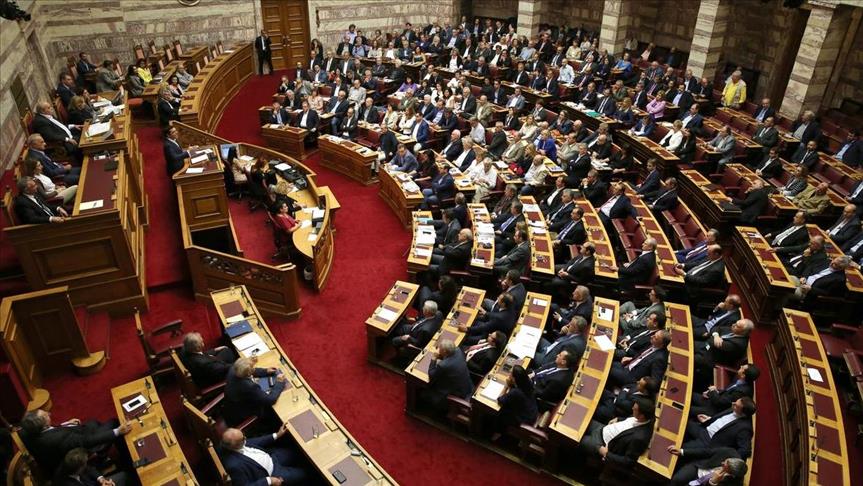
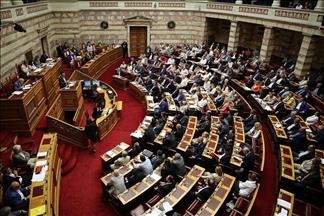
A bill to enact a number of the reforms required by the Greek bailout deal will go to parliament for approval on Thursday.
The bill includes some, but not all measures which Greece’s European creditors require if the next tranche of next €2 billion ($2.2 billion) tranche of its three-year, €86 billion bailout loans.
One such measure is the reduction of the number of installments Greek citizens can have in repaying money owed in taxes or social security. Currently, they can enjoy 100 installments, but the bill would limit that number in certain cases.
Another measure increases taxation of agriculture, oil production and microbreweries.
But notably missing from the bill is a measure addressing non-performing mortgages, a serious problem for Greek banks as about half of outstanding loans are not being repaid.
The Greek government is still negotiating with its creditors on this issue The government is also still working on value-added tax for private education, and on pharmaceuticals prices.
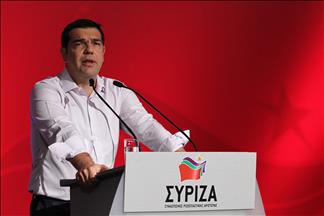
In a press conference on Tuesday, European Economic and Monetary Affairs Commissioner Pierre Moscovici discussed the results of his meeting with Greek Prime Minister Alexis Tsipras.
Moscovici said that there were “three or four unresolved issues on the table,” issues that must be settled by Monday for Greece to receive the next bailout funds.
“It is important that the milestones are concluded by the end of this week and we discussed with the Prime Minister on which points there are still improvements to be made,” Moscovici told the press.
According to a report by Greek newspaper Katherimini, the unresolved issues are the rules on home foreclosures due to non-performing mortgages, the changes in the 100-installment payment plan for citizens who owe tax or social security payments, fixing the minimum prices for generic drugs and the re-imposition of a 23 percent value-added tax on private education with equivalent fiscal measures.
The government insists on prohibiting foreclosures on primary residencies which are currently protected if they are under a taxable value of €300,000 ($328 065). The institutions want to reduce this to a market value of €120,000 ($131,226), and to protect only the owners living below the poverty threshold.
The government has made an alternative proposition: Prohibiting foreclosures on houses with the assessed value of €200,000 ($218 710) , and on which owners owe the banks 100 percent of the value of the house. In this way, 72.4 percent of debtors will be protected. The proposal of the creditors protects only 17.3 percent of those unable to pay back their loans.
Moscovici stressed that "it will be more difficult to reach agreement with the Eurogroup" if the remaining issues have not been resolved.
Referring to the eventual restructuring of Greek debt, Moscovici said that “First, the initial milestones must be adopted, and then the Eurogroup will be able to make further decisions.”
“We must keep the pace and keep the momentum” Moscovici concluded.