BANGKOK
The carnage continues.
Despite the junta's best efforts to educate drivers and pedestrians in road safety, 306 people had so far died Wednesday on Thailand's roads during the hazardous New Year period -- just short of the 2014 figure when 322 people lost their lives.
With one day to go in the seven-day annual holiday, "Songkran" is lined up to be more deathly than the year before.
Deputy-Interior minister Sutee Markboon told the Bangkok Post Wednesday that the 306 died and another 3,070 were injured in 2,915 car and motorbike accidents.
In 2014, 322 were killed and 3,225 injured.
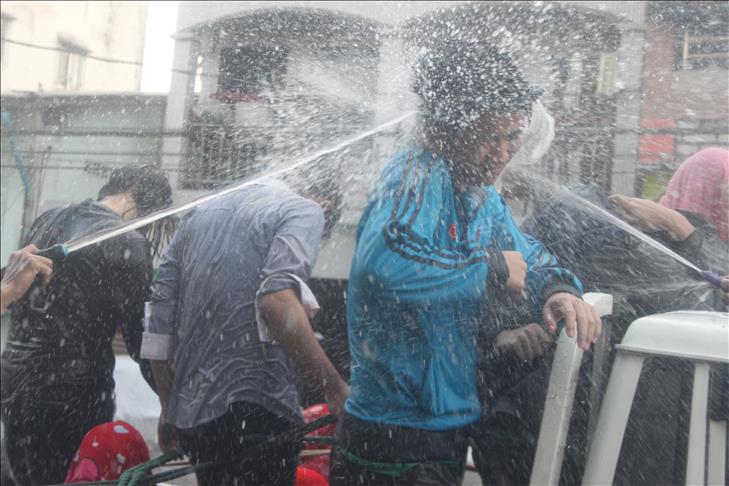
Whereas the New Year tradition originally involved millions of Thais returning to their native provinces or tourist sites - and a gentle pouring of water on a Buddha statue or an elderly person as a sign of respect - in the past 20 years the festival has degenerated into an all out water war.
Songkran celebrations have become an orgy of alcohol fuelled, water throwing chaos, with foreign tourists in such places as Bangkok's back-packer area of Khao San Road all too prepared to lend a hand.
Water is thrown at partygoers, motorbikes and cars -- sometimes from buckets also filled with ice -- white powder is daubed, and the words "Happy Songkran" (Happy Thai New Year) are uttered nationwide - often to placate rather than bless.
In the ensuing chaos, cars plough through traffic crossings, motorbikes skid on wet roads, fights break out and the calmest of partygoers lose their heads - not always literally.
The carnage, however, is not solely Thailand's problem.
In neighboring Myanmar, Laos and Cambodia, similar festivals attract such chaos.
Myanmar state media reported Wednesday that 10 people were killed when a truck carrying farm workers fell off a hillside in the country’s south during the New Year holiday, injuring two others.
The daily reported that since the festivities began Monday, car accidents in the country’s largest city Yangon had left at least 26 people injured.
In 2013, Thailand had the second worst road safety record in the world behind Namibia, with 44 road deaths per 100,000 people, according to a study by the University of Michigan’s transportation research institute.