By Joshua Carroll
According to preliminary results of Myanmar's census, the country has 9 million less people than initially thought - raising initial questions why.
Minister of Immigration and Population Khin Yi said while releasing the results of the United Nations-backed project that a major reason for the discrepancy is that migrant workers and students studying overseas have not been included in the data.
"In the past, we have announced that the population was over 61 million. We have announced the population figure every October. As we weren't able to conduct a census for over 30 years... the estimation in the past may not be accurate," Khin Yi told media.
"The provisional result of the population in Myanmar is 51,419,420. The female population is 1.7 million more than the male population," he added.
Khine Khine Soe, a director at the country's immigration ministry, said that despite the projection being based on the 1983 census and what appeared to be a mistaken expected growth in population, around 1.2 million people were left out in parts of conflict-torn Kachin and Karen states - rebel-controlled land off-limits to census takers - and also in western Rakhine state.
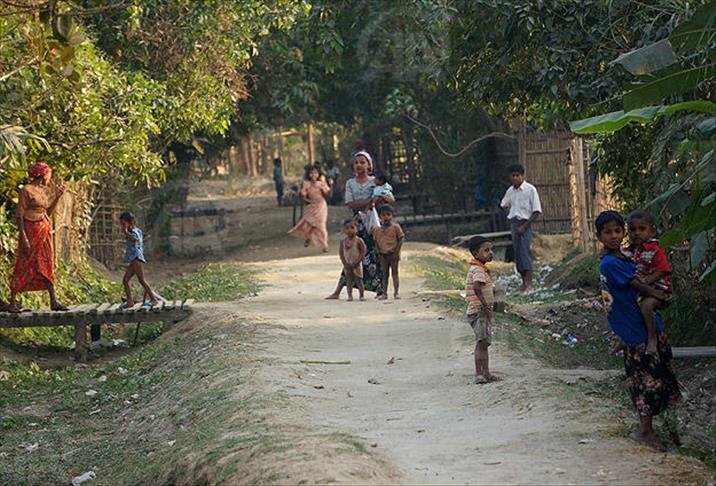
Rakhine Buddhists had objected to a persecuted Muslim minority called the Rohingya being included in the census, insisting they should be forced to be recorded as "Bengali," a name that enforces the spurious claim that they are illegal immigrants.
Myanmar news site ELEVEN reported Sunday that census data collectors were not able to conduct the census in Sittwe, Mrauk U, and Maungdaw districts in Rakhine "due to pressure given by the Bengalis."
Many minorities had said the census could potentially weaken their political representation or claim to ethnicity if the process undercounts their group.
In 2012, animosity between Buddhists and Muslims erupted in Rakhine, leaving dozens dead and around 140,000 people - mostly Rohingya - displaced. Days before the census started in March, Buddhist mobs attacked aid workers’ homes and offices in Rakhine's capital, throwing stones and forcing workers to flee under police protection.
The last census was conducted in 1983 under a brutal military dictatorship known for manipulating figures to suit its own ends. Rights groups claim it deliberately undercounted Muslims. More accurate figures could reveal a much larger Muslim population than the 4 percent previously reported.
The full result - including ethnicity and religion breakdown, is expected to be released May 2015.
www.aa.com.tr/en