07 March 2016•Update: 07 March 2016
By P Prem Kumar
KUALA LUMPUR
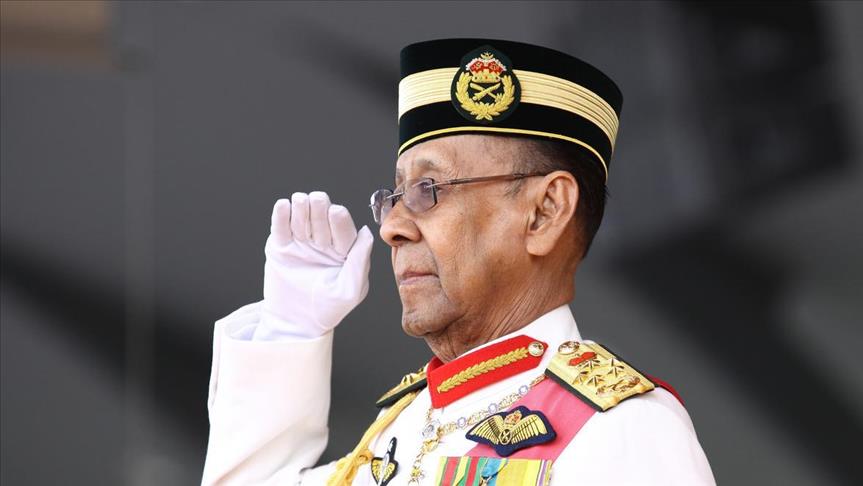
Malaysia’s king underlined Monday that the "real" security threat facing the country needs to be taken seriously in light of recent terror attacks in the Southeast Asian region.
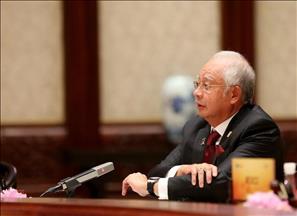
Sultan Abdul Halim Mu’adzam Shah called on the government led by Prime Minister Najib Razak to increase efforts to beef up security assets in order to face external challenges in time to come.
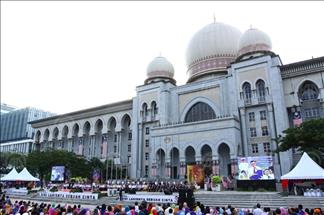
"The security threat to the country is real. The threat of extremism and elements of violence should be taken seriously as it can lead to instability in the country," he told parliament.
"Therefore, I support any proactive effort, through the implementation of laws and by increasing security assets, to curb extremism and the spread of militant ideology," he added.
Shah expressed his support for the implementation of anti-terrorism laws to ensure the safety of Malaysia in view of "the terrorism menace that is slowing creeping into the country".
The king’s comments come after Malaysian lawmakers have approved a series of legislation aimed at tackling terror threats.
In April last year, the Lower House passed the Prevention of Terrorism Bill 2015 without amendment, despite strong criticism from opposition lawmakers and civil society groups.
On Dec. 22, both houses of parliament approved the controversial National Security Council (NSC) Bill, which critics allege grants powers to the premier that could undermine the federal constitution and the position of the king.
Under the bill, the NSC -- which would be chaired by the prime minister -- can take charge of security forces and declare a designated location seen as a risk to the country as a "security area".
Such an area would be valid for six months at a time, subject to renewal by the premier.
Security forces will also posses the right to search or arrest without warrant any individual found committing, or suspected of having committed, or reasonably under the suspicion of having committed any offense under written laws in the security area.
Human Rights Watch has referred to the NSC as a clear tool for repression.
"Now we know what the path to Malaysian dictatorship looks like," the group’s deputy director for Asia, Phil Robertson, said in a statement released on Dec. 3 shortly before the lower house passed the legislation.
He warned that the law establishes new lows on impunity by security forces by protecting them from any legal proceedings for any actions taken "in good faith", while imposing a sweeping obligation of secrecy on all those involved with the council.
Malaysian police had raised alert levels to the highest in January following a Daesh-linked attack in neighboring Indonesia that left eight people dead, and listed seven potential hotspots for Daesh attack.
The force had also nabbed a suspected Daesh-linked militant in Kuala Lumpur, saying the arrest occurred just hours before a planned nighttime suicide bombing at an entertainment venue in the Bukit Bintang tourist area.
After Australia issued an alert last month warning of potential violence in capital Kuala Lumpur, PM Razak said that security in major tourist attraction areas countrywide had been beefed up by a joint patrolling team comprised of the military and police.