By Anees Barghouthy
JERUSALEM
Israeli Prime Minister Benjamin Netanyahu has assured Jordanian King Abdullah II that his country was committed to maintaining the status quo at East Jerusalem's flashpoint Al-Aqsa Mosque compound.
According to Israel's Walla news website, Netanyahu made the assertion in a phone conversation with the Jordanian monarch, whose country oversees Jerusalem's holy sites in line with a 1994 peace treaty with Israel.
"Israel is committed to calm and to Jordan's role in the Temple Mount, according to the peace treaty signed between us," the Israeli premier was quoted as having told King Abdullah, using the Jewish term – "Temple Mount" – for the Al-Aqsa Mosque compound.
The two leaders also called for an immediate end to all acts of violence and incitement in Jerusalem, the website reported.
The phone conversation came one day after Jordan recalled its ambassador from Israel to protest Israeli "violations" in East Jerusalem.
Jordan's UN mission is also preparing to lodge a complaint with the UN Security Council over Israeli "aggression" in the flashpoint mosque complex.
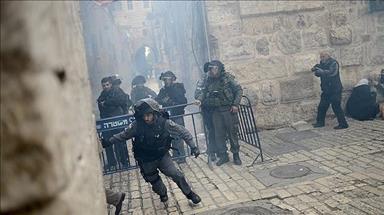
Tension has been running high in East Jerusalem since late last week, when Israel closed the Al-Aqsa Mosque compound after an extremist rabbi was injured in a west Jerusalem shooting.
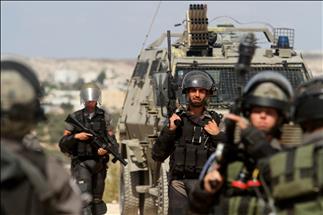
Israeli authorities reopened Al-Aqsa on Friday following a day of violent clashes with Palestinian protesters, but barred male Muslim worshippers under 50 years old from entering the site.
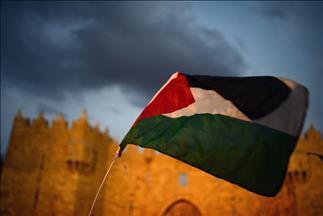
Palestinian Authority President Mahmoud Abbas, for his part, warned that the closure of the Al-Aqsa Mosque compound constituted a "declaration of war" on the Palestinian people and their sacred places.
For Muslims, Al-Aqsa represents the world's third holiest site. Jews, for their part, refer to the area as the "Temple Mount," claiming it was the site of two Jewish temples in ancient times.
Israel occupied East Jerusalem during the 1967 Middle East War. It later annexed the holy city in 1980, claiming it as the capital of the self-proclaimed Jewish state – a move never recognized by the international community.
In September 2000, a visit to the site by controversial Israeli politician Ariel Sharon sparked what later became known as the "Second Intifada," a popular uprising against Israel's decades-long occupation in which thousands of Palestinians were killed.
www.aa.com.tr/en