By Deepak Adhikari
KATHMANDU, Nepal
On a foggy December morning 14 years ago, Chaite Lal Chaudhari was cycling home after visiting his aunt to prepare for Maghi, a harvest festival celebrated by Nepal's indigenous Tharu community.
Halfway through his ride, the 28-year-old man and his wife Sita Janaki Chaudhari, who was sat behind him, were arrested by the then-Royal Nepal Army soldiers in Magarghadhi, a village in the Bardiya district of Nepal’s southwestern plains, where the state security forces were executing a cordon and search operation.
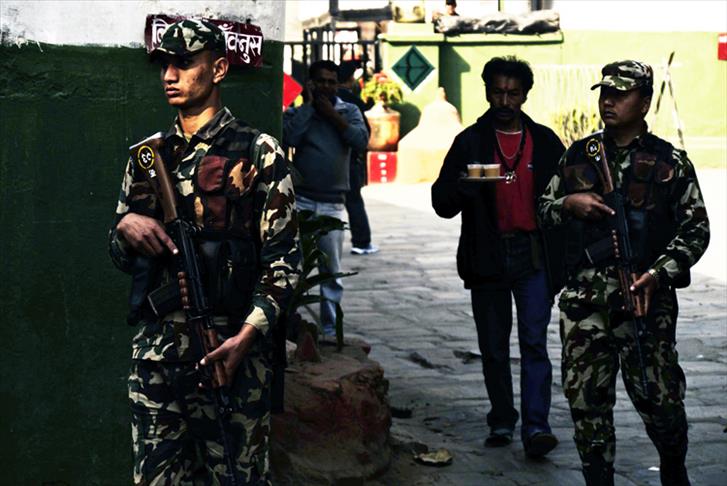
The Maoist insurgency, in its sixth year of fighting for an end to royalist rule, had provoked the military into the battle, and the government had imposed a state of emergency.
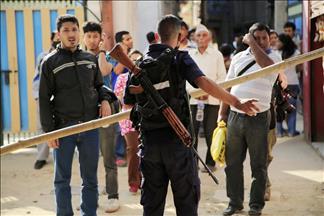
As the war rapidly escalated, security forces carried out mass searches and arrested large numbers of villagers. Chaudhari, who was affiliated with a farmer’s wing of the Maoist party, was among 10 people arrested that morning, according to his younger brother Bhagiram Chaudhari.
Five villagers of Magarghadhi were released, but the newly married Chaudhari couple and three others, also arrested while travelling, have never been accounted for.
An estimated 1,300 people were forcibly disappeared during Nepal’s decade-long Maoist insurgency, which ended in 2006 after the rebel leaders and government signed a peace deal.
The war claimed lives of more than 16,000 people, thousands were injured and tens of thousands displaced. Rights groups have accused both security forces and Maoist rebels of grave human rights violations.
The disappearance of a large number of Tharus -- 242 according to Chaudhari -- in Bardiya district, where the community makes up over half the population, has been well-documented by human rights organizations.
In a December 2008 report on enforced disappearances in Bardiya, the United Nations Office of the High Commissioner for Human Rights said there were more than 200 cases in the district, with the Tharus making the majority of the victims.
“Most of the disappeared were specifically targeted and arbitrarily arrested during search operations, mainly from their homes during night by the armed and uniformed Royal Nepal Army teams,” the report said.
The report highlighted how Tharu civilians were singled out for harassment and humiliated by state security forces, calling the operations a “part of broader pattern of widespread human rights violations” that occurred between December 2001 and January 2003, when the war was at its peak.
Their methods of torture involved severe beatings, including on the soles of feet; rolling a heavy wooden pole with pressure applied on limbs, causing muscular damage; having pins inserted beneath the fingernails or having fingernails pulled out; being submerged in water; rape and mock executions, according to the report.
“Tharus were targeted because the community had been exploited for many years. The Maoists lured them with popular slogans such as an ethnic state for the community,” said Bhagiram Chaudhari, who now heads the Conflict Victim Committee in Bardiya district.
“The state pigeonholed all Tharus as Maoists, which made them an easy target for arrests and torture. But not all Tharus were Maoists. They became victims because they were not powerful enough to voice their concerns,” he told Anadolu Agency.
Early last year, Nepal formulated laws to set up a Truth and Reconciliation Commission and Commission on Enforced Disappearance, fulfilling a major condition of the peace deal.
The commissions, originally scheduled to be completed within six months of the peace deal, took eight years to materialize.
Rights activists and victims’ groups say they have been left behind in the process, arguing that the laws favor perpetrators. They fear the bodies will grant amnesties for human rights violations.
“We fear that the commissions would favor perpetrators over the victims. From the very beginning, we have been sidelined from the process,” Suman Adhikari, chairperson of the Conflict Victims’ Common Platform, told Anadolu Agency.
Six months ago, the government appointed chief commissioners and commissioners for the bodies, with two year terms. The non-judicial bodies are tasked with identifying the perpetrators, initiating reconciliation with their victims and recommending reparations.
Adhikari said his group had to fight a legal battle at the Supreme Court, objecting to two provisions in the laws that formed the commissions which said the peace and reconstruction ministry would investigate the cases following recommendations from the commissions.
“The court has ordered the commissions to refer the cases to the attorney general instead of the ministry and to be heard at the Special Court. But the ruling hasn’t been implemented yet,” he said.
Madhabi Bhatta, a commissioner and spokesperson of the Truth and Reconciliation Commission, defended them, saying the commissions were just starting off logistical delays.
“We just formulated regulations. We have set up our office and a website. Our teams visited 21 districts affected by the insurgency. We have come up with a code of conduct and communication policy,” she told Anadolu Agency.
Bhatta said reaching out to the people living in remote regions so that they would lodge complaints at the commissions was a serious challenge.
“The commissions have been formed to complete the remaining task of the peace process. We will make sure that anonymity is maintained in serious cases such as rape. We won’t compromise on anything. The investigation of truth must be rigorous,” she said.
She said her office was seeking details about military officials on both sides of the war in order to help identify perpetrators and victims. The commissions would investigate the cases, organize public hearings and seek witness accounts, she said.
“We will make sure that perpetrators of crimes against humanity are punished. The victims must get justice. It’s also our responsibility to create an environment for reconciliation,” she said.
Satish Mainali, a human rights lawyer, however, said the commissions have failed to inspire confidence among victims.
“This is not about a criminal justice system, where the focus is on punishing the perpetrator. To ensure transitional justice, the commissions must be pro-victims. But I don’t see that’s happened here,” he told Anadolu Agency.
He criticized the commissions for their lack of political will to settle critical issues at hand. He also feared that many victims may not seek redress from the commissions.
“I am not very optimistic about the commissions. In Nepal, even before the start of the insurgency, impunity was institutionalized by the power brokers,” he said.
“One can easily get away with serious human rights abuses. So there is very little chance of transitional justice being delivered. If we fail to address the issue, we will have to face another conflict sooner or later.”