By Hader Glang
ZAMBOANGA CITY, Philippines
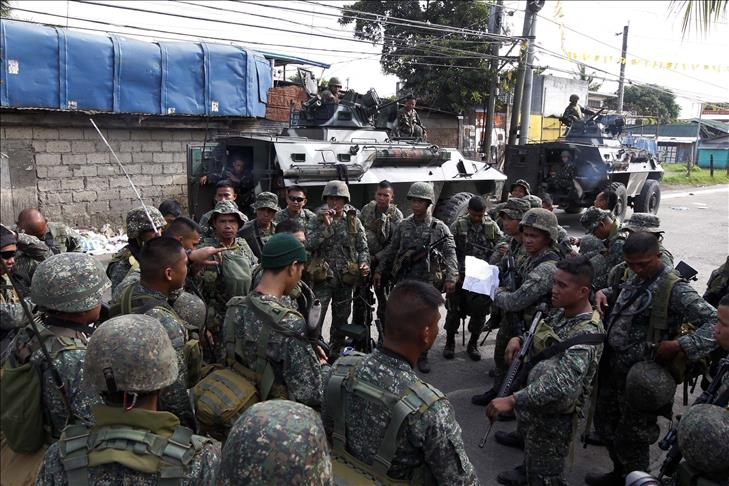
Government forces launched early-morning airstrikes against the al-Qaeda-linked Abu Sayyaf group in the southern island province of Sulu on Saturday, followed by a ground assault which is believed to have caused an undetermined number of casualties.
The attack was the first engagement with the group since government forces launched a brief renewed offensive on the ragtag band of self-styled Islamists following their release of two Germans over two weeks ago.
Colonel Alan Arrojado, commander of the Joint Task Group for Sulu, said in a text statement sent to an Anadolu Agency correspondent Saturday that two attack helicopters flew 30-minute sorties at 07.20 local time (01.20 Turkish time), during which caliber 50 machine guns were fired at the group's lair in Bungkaong village in Sulu's Patikul town.
"High explosive ordnance munitions were also dropped by the choppers at designated targets," Arrojado added. "We will not give these bandits time to rest. Our troops will continuously pursue them in their forest lairs. There would be no letup in the campaign against the Abu Sayyaf."
Sulu occupies the middle group of islands in the Sulu Archipelago of the Autonomous Region in Muslim Mindanao in the Philippines deep south, between Basilan - the Abu Sayyaf's island stronghold - and Tawi-Tawi.
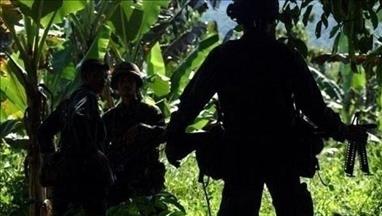
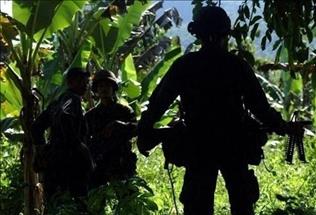
Arrojado said that a ground assault was then launched on the "undetermined number of heavily armed men" resulting in the discovery of an encampment, believed to be the headquarters of Julaswan Sawadjaan, an Abu Sayyaf leader.
As of 15.00 local time, there was no report of casualties, but Lieutenant Colonel Marces Gayat, the commanding officer of 35th Infantry Battalion, said in a similar text statement "there were bloodstains on their [Abu Sayyaf] route of withdrawal" after ground troops had traded fire with the militants.
The officials said they believed that the group was among those responsible for the kidnapping of German couple Stefan Victor and Henrike Dielen, who were seized on their yacht off the coast of the Philippines’ southern Palawan Island in April.
The group has claimed it was paid a P250 million ($5.5 million) ransom for the release - along with demanding Germany stop supporting the United States-led campaign against the Islamic State of Iraq and the Levant (ISIL) in Iraq and Syria - but the government has maintained no payment took place.
Armed Forces Chief of Staff General Gregorio Pio Catapang, who visited Jolo last week with Philippines Defense Secretary Voltaire Gazmin, directed the soldiers to maintain military pressure against the group to force them to release all remaining hostages - thought to include two Europeans, two Malaysians, a Japanese and local residents.
Meanwhile, the United Kingdom has reiterated that nationals avoid travel to some parts of Mindanao, warning of a heightened threat of a "terrorist" attack "globally."
In an October 31 statement, the country's Foreign and Commonwealth Office (FCO) cited "ongoing terrorist activity and clashes between the military and insurgent groups" in the area.
"The FCO advise[s] against all but essential travel to the remainder of Mindanao for the same reasons," it added.
It has warned that "terrorist groups... continue to plan attacks and have the capacity and the intent to carry out attacks at anytime and anywhere in the country."
It listed the "terrorist groups operating in the Philippines that continue to pose a threat" as the New People's Army - the armed wing of the Communist Party of the Philippines - the Abu Sayyaf Group, and Jemaah Islamiyah, a Southeast Asian militant group with links to al-Qaeda, which has carried out bomb attacks in Indonesia and elsewhere in the region
Although, a peace deal was signed between the government and the region's one-time largest rebel outfit - the Moro Islamic Liberation Front (MILF) - this year to end a decades-old rebellion that has claimed tens of thousands of lives and aims to create an autonomous Muslim area in the south, other rebel factions - including the Abu Sayyaf - continue to fight on.
The FCO warned in its statement that although there is hope that the peace agreement will bring the 40-year insurgency to an end, "extreme elements within the two main insurgent groups - the Moro National Liberation Front and the Moro Islamic Liberation Front - continue to pose a security threat."
It warned that a splinter group of the MILF - "the Bangsamoro Islamic Freedom Fighters" - has been responsible for a number of attacks on the Philippine military and security services over the last year.
Since 1991, the Abu Sayyaf -- armed with mostly improvised explosive devices, mortars and automatic rifles -- has carried out bombings, kidnappings, assassinations and extortions in a self-determined fight for an independent Islamic province in the Philippines.
It is notorious for beheading victims after ransoms have failed to be paid for their release.
ISIL has captured large swathes of land in Iraq and Syria, later declaring the territories under its control an Islamic "caliphate."
The U.S. and its Arab allies began bombing ISIL targets inside Syria in late September, after conducting airstrikes in Iraq since August.
www.aa.com.tr/en