SARAJEVO, Bosnia-Herzegovina
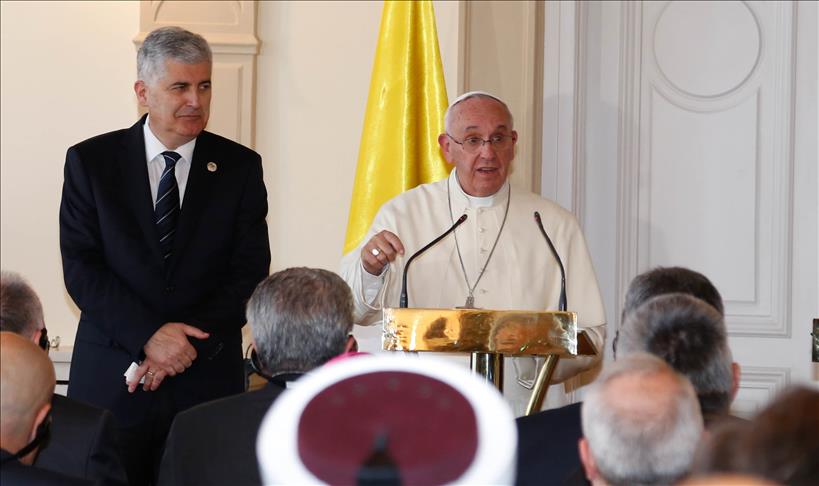
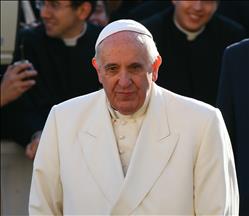
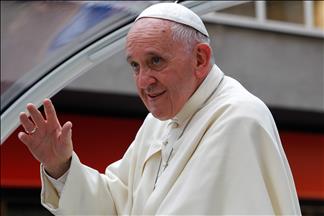
Bosnia and Herzegovina can “become a message” of coexistence and religious tolerance, Pope Francis has said.
The pontiff told the Interreligious Council of Bosnia and Herzegovina on Saturday that he valued the non-governmental organization’s work in Sarajevo, “at the crossroads of peoples and cultures”.
"In a world which is unfortunately still torn by conflicts, this country can become a message to confirm that it is possible to live side by side in diversity,” he said.
"Your work is very important in Sarajevo, at the crossroads of peoples and cultures because of the richness of diversity that has allowed cultural and spiritual development of the country, on the other hand was the reason for division and bloody wars," said Francis.
"Your presence here is already the message we want dialogue and we want to build," he added.
The meeting was attended by the Archbishop of Sarajevo, Vinko Puljic; Reis-ul-Ulema of the Islamic Community in Bosnia, Husein Kavazovic; Bishop of Eparchy of Zahumlje and Herzegovina, Grigorije Duric, and the president of the Jewish community in Bosnia, Jakob Finci.
Pope Francis ended his one-day trip in Bosnia and Herzegovina Saturday after paying a visit to a youth center.
Earlier during the visit, Pope Francis called for "war never again" as he gave a sermon to 65,000 celebrating a Catholic Mass in Sarajevo on Saturday.
Speaking at the Asim Ferhatovic Hase stadium, where his predecessor Pope John Paul II addressed crowds 18 years earlier, Francis said: “War means children, women and the elderly in refugee camps; it means forced displacement of peoples; it means destroyed houses, streets and factories; it means, above all, countless shattered lives."
“You know this well, having experienced it here: how much suffering, how much destruction, how much pain. Today, dear brothers and sisters, the cry of God’s people goes up once again from this city, the cry of all men and women of good will: war never again.”
Calling on his mostly ethnic Croat audience to become “artisans of peace”, Francis led prayers to ask for the strength to “sow peace and not war and discord.”
The pope also called for the “building of new bridges” as he visited the Bosnian capital.
Twenty years after the end of the wars that saw around 100,000 people killed, the 78-year-old pontiff was greeted by crowds of thousands of well-wishers.
"Sarajevo has been called The Jerusalem of Europe,” he said in address to Bosnia’s three-member presidency. “Indeed it represents a crossroads of cultures, nations and religions, a status which requires the building of new bridges, while maintaining and restoring older ones, thus ensuring avenues of communication that are efficient, sure and fraternal.”
Francis said his welcome at the city’s airport by Muslim, Orthodox, Catholic and Jewish children showed that “even the deepest wounds can be healed by purifying memories and firmly anchoring hopes in the future”.
Francis is the third pope to visit Bosnia since the break-up of Yugoslavia and the Bosnian wars between 1992 and 1995.