By Michael Daventry
With just under two weeks to go before voting day, Scotland’s nationalists are buoyant.
Alex Salmond, the country’s First Minister and leader of the campaign to leave the United Kingdom, delivered a barnstorming performance to defeat pro-Union rival, Alistair Darling, in a final live television debate.
Then two opinion polls this week put the pro-Union vote just six points ahead of those who favor Scotland breaking away from England, Wales and Northern Ireland – the narrowest gap seen so far.
Little wonder the ‘Yes’ campaign believes its dream of full Scottish independence is within its grasp in the referendum on 18 September.
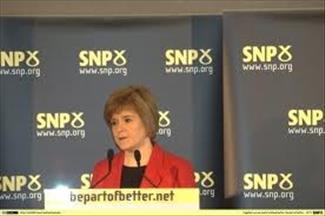
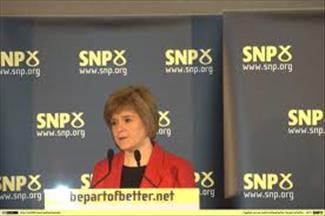
Nicola Sturgeon, Salmond’s deputy, says the tightening polls feel just like three years ago, when her party suddenly and unexpectedly won a majority in the Scottish parliament.
“I definitely sense a shift,” she told journalists during a campaign stop in Bathgate, near the country’s capital Edinburgh, on Wednesday.
“This is a referendum, it's not an election, but certainly I remember very well how that felt in 2011 when you just got the sense that something was moving in terms of opinion. And I feel that now.”
Polling company YouGov, which published its latest survey on Monday and has historically shown less favorable results to the Yes vote, put the No vote at 48 per cent. Forty-two per cent favored independence.
Scots have diverse views on whether their country could sustain independence from London; the polling results indicate more and more are making the stark choice between Yes or No.
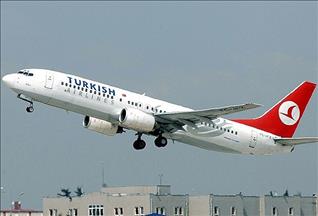
One enthusiastic supporter of a Yes vote is Sitki Nalci, director of the Turkish-Scottish Chamber of Commerce and Industry, who has lived in southern Scotland for 30 years.
“The referendum is important for Turkish people because the majority of them in Scotland own small businesses and save up to £6,000 [$9,800] each year through business rates discounts,” he told Anadolu Agency.
“They also benefit from free health and higher education services."
“Besides these, if Scotland becomes independent it will rewrite its laws on foreigners and minorities and develop a system that is more equal and based on human rights – this will create conditions that greatly benefit Turks.”
For war veteran Jack Moffat, 95, the referendum is a battle for the country’s soul. He described a Yes vote as an act of disloyalty against his Second World War comrades: “Pals of mine who didn't make it...I have a feeling that if I had gone to a Yes vote I would have betrayed them.”
For others, the referendum is an opportunity to make a bit of money. Gambling chain William Hill said a record £2 million (US$3.26 million) has been spent by people betting on the outcome. Last week police arrested a 28-year-old man after he attempted to sell his vote on the auctioning site eBay, saying he did not care about the outcome.
- Overseas Examples
Unionists fearing the worst have found comfort by looking at other territories with strong ties to Britain, where the debate over fundamental constitutional questions has died down following referendums.
People in French-speaking Quebec were asked in 1995 if they wanted to break away from Canada and manage more of their own affairs. In 1999, Australians went to the polls to vote on ousting Queen Elizabeth II and forming a republic.
In both territories, vast numbers of people – more than 90 per cent of the electorate – turned out to vote. In both, people voted, narrowly, to keep things unchanged. In both, public debate on the issue has largely died down.
YouGov might point to a narrow outcome in Scotland, but it still says the nationalists would lose a referendum that both sides have said will not be repeated for a generation.
That is why the nationalists are scrambling to win over the 10 per cent of voters who told YouGov they definitely intended to vote but had still not made up their minds.
These undecided voters are littered around the country. They include young people aged 16 and 17, enfranchised for the first time in a British election. Another target group is supporters of the opposition Labour Party, many of whom defected to the Scottish National Party at the last parliamentary election to deliver them a majority.
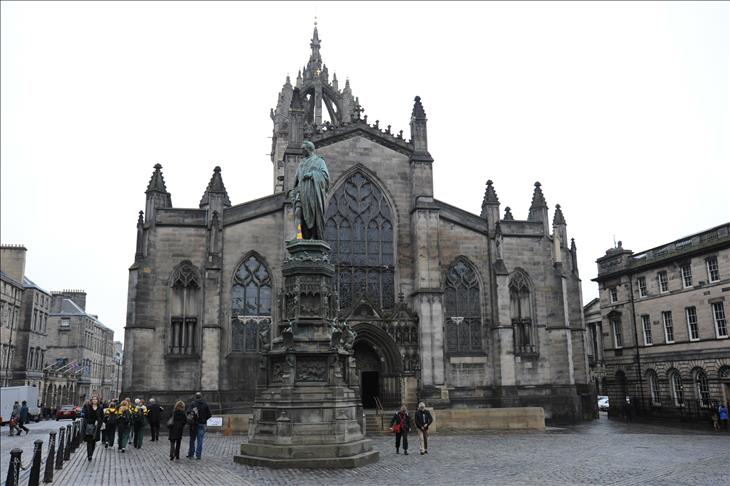
Scotland might be home to Britain’s most remote wildernesses, but the main battleground in this referendum will be the Central Belt. In this region that includes the country’s two largest cities, Edinburgh and Glasgow, and dozens of commuter towns in between, pollsters say the vote is neck-and-neck.
It is here that Scotland’s future will be won or lost.
www.aa.com.tr/en