By Nancy Caouette
MEXICO CITY
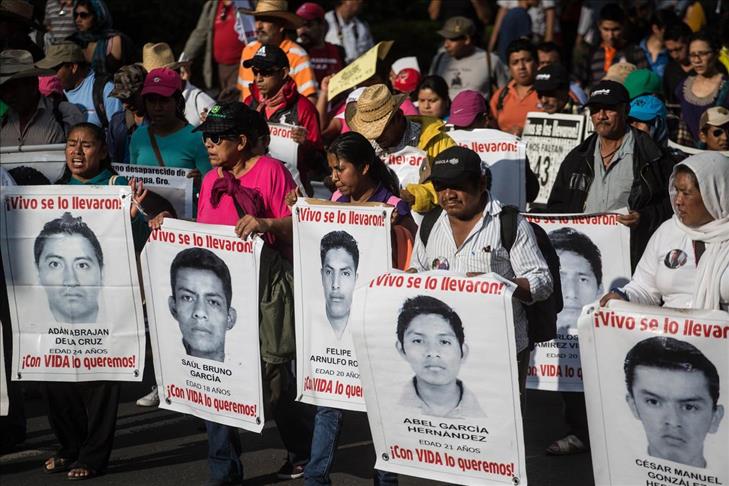
The remains of another missing student who disappeared last year from a rural teachers’ college have been formally identified, the Attorney General confirmed Wednesday.
Twenty-one-year-old Jhosivani Guerrero de la Cruz is just the second of 43 missing youth to be identified by forensic experts from the University of Innsbruck in Austria.
DNA tests on bone fragments last December allowed the Austrian experts to identify 19-year-old Alexander Mora Venancio.
According to the official version of events, the remains analysed in Austria were found in a garbage dump in Cocula, close to Iguala, the town in the state of Guerrero where the students disappeared Sept. 26, 2014.
Austrian experts have never confirmed the location where the ashes where found because they did not participate in the collection of the remains.
The Mexican government’s version say corrupt local police officers abducted the students in Iguala. They then turned them over to local drug cartel members who killed and burned their bodies in a giant fire in a garbage dump in Cocula.
International experts designated by the Inter-American Commission on Human Rights (IACHR) earlier this month rejected the official version provided by authorities, citing numerous holes in the investigation.
Among those holes were that fire experts concluded it was impossible that a fire of the magnitude necessary to reduce the bodies to ash occurred at the dump.
Mexico's current Attorney General Arely Gómez, who took office after the investigation was closed, said a second investigation with international experts would be requested to study the first official version and to pursue new leads.
The case has damaged the reputation of President Enrique Pena Nieto during the year since the students went missing. Pena Nieto ran on a platform of ending corruption, and his administration has been questioned several times about holes in the official version, and on neglected investigative leads, including the army’s implication in the crime.
Former Attorney General Jesus Murillo Karam, based his investigation on the confessed testimony of four presumed drug dealers in Guerrero.
The local investigation magazine, Proceso reported Sunday that the four men were in fact construction workers who were tortured by authorities in order to force their confessions.
Mexican security forces beat the four men, wrapped their heads in bags and administered electrical shock, according to Proceso’s investigation.
Relatives of the students and IACHR experts will meet with Pena Nieto on Sept. 24.