By Chan Kok Leong
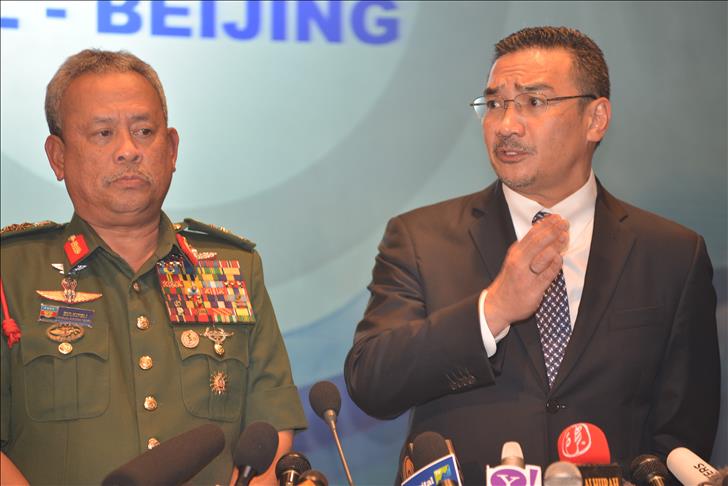
As the hunt for Flight MH370 enters its sixth day, search methods are moving from the obvious to the unorthodox.
While state of the art equipment such as military radar, satellites, warships and military aircraft have been deployed since Day 1, fishermen, shaman and crowdsourcing sites have since joined the affray.
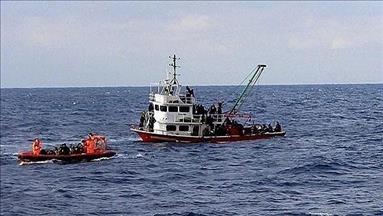
The Search-and-Rescue effort for the Malaysian Airlines passenger plane which went missing March 8 now includes 39 aircraft, and 42 ships from Australia, Vietnam, China, Indonesia, Thailand, the United States, New Zealand, Singapore, the Philippines, India, Japan and Brunei.
The Indian Navy has also deployed its Rukmini, or GSAT-7, satellite to aid in the hunt.
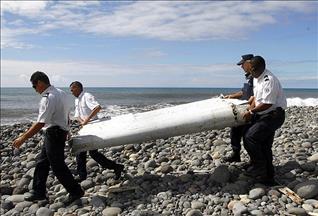
Added to this are a multitude of local fishing vessels. On Wednesday, a group of fishermen said they had found a life raft bearing the word “Boarding,” 10 nautical miles off Port Dickson in the Straits of Malacca, one of the world’s busiest shipping lanes which runs along Malaysia’s west coast.
However, the raft sank after it was handed over to the Malaysian Maritime Enforcement Agency.
Efforts were being made Thursday to recover it.
A U.S. company has invited Internet users to comb through satellite images of over 3,100 square kilometers of ocean between the Gulf of Thailand and the South China Sea to check for signs of the plane.
According to the online crowdsourcing platform Tomnod.com, around 25,000 people have signed up. The volunteers review the images and "tag" anything deemed suspicious or requiring further study.
Outside of the conventional, the search for the Boeing 777-200ER has also taken on the bizarre.
On Wednesday, “bomoh” (shaman) Ibrahim Mat Zin returned to Kuala Lumpur International Airport to help assist. The self-titled “The King of Bomohs Worldwide” used “zam-zam” (magic) water, two coconuts, a "magical" walking stick and a "magic" carpet that was used as a “boat” for him and his assistants.
“The purpose of the rituals is to weaken the bad spirits so that rescues can find the plane if it has crashed,” he told reporters.
On Monday, Ibrahim had used a pair of binoculars fashioned out of bamboo and a fish trap hook to try and find the plane.
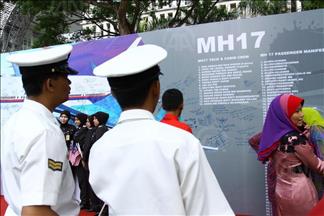
Flight MH370 went missing after losing radio contact with Malaysian and Vietnamese air traffic control after leaving Kuala Lumpur International Airport on March 8.
The Beijing-bound plane had 239 passengers aboard, including 12 flight crew from 14 different countries.
englishnews@aa.com.tr