By CS Thana
BANGKOK
Thailand said Monday that 109 Muslim Uighur who were sent to China amid international outcry are being treated "well" by the Chinese government.
After drawing criticism from the international community and human rights groups over the deportation earlier this month amid reports of persecution, Thailand sent a fact-finding team to China last week.
The Uighur were from a group of around 350 people who had been detained in Thai immigration centers for around two years.
Of the 350, around 180 -- almost all women and children -- have arrived in Turkey, 109 -- 85 men and 24 women -- have been sent to China and around 60 are thought to remain in Thailand.
General Anusit Kunakorn, the National Security Council secretary general who led the team, told reporters Monday that the deported Uighur were being held at a holding facility in China to which the Thai delegation had allegedly been given unrestricted access.
"They are in quite good conditions. They [Chinese authorities] are treating them well, the conditions are even better than when they were here [in Thailand]," Kunakorn said.
The general added that the 60 Uighurs who remained in Thai detention would not be sent back at the present time as more investigations were needed to determine whether their country of origin was China or Turkey.
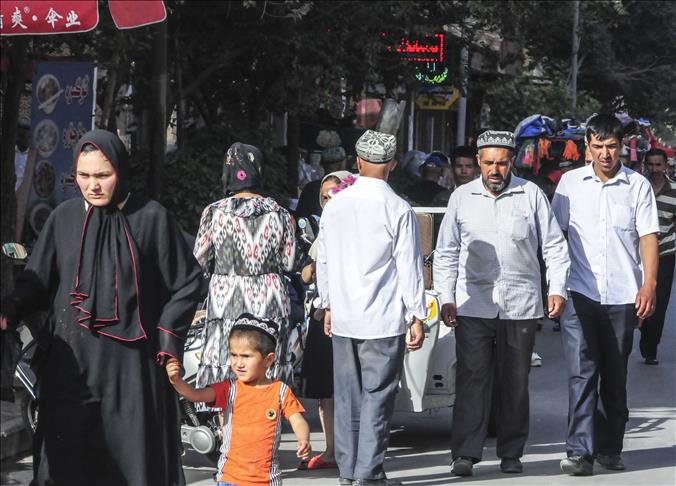
The Uighur have been at the center of a diplomatic tug-of-war between Beijing and Ankara, with China identifying the Muslims as from northwestern Xinjiang, while Turkey has welcomed them as its own.
Many Turks believe that Uighur are among a number of Turkic tribes that inhabit the Xinjiang region, and consider it to be part of Central Asia, not China.
Condemnation of the deportation continued last week after television pictures showed the Uighur forcibly being loaded onto planes with their heads covered in black hoods.
The pictures from Chinese TV channel CCTV show the Uighur seated in an airplane with handcuffs and black hoods over their heads as Chinese police officers sat at their sides.
International rights group Human Rights Watch had also accused Thailand of separating Uighur families when it decided who would go to Turkey and who went to China.
Uighur -- who constitute around 45 percent of the population of Xinjiang -- have accused China of carrying out repressive policies that restrain their religious, commercial and cultural activities.