Mustafa Çağlayan
30 September 2015•Update: 30 September 2015
NEW YORK
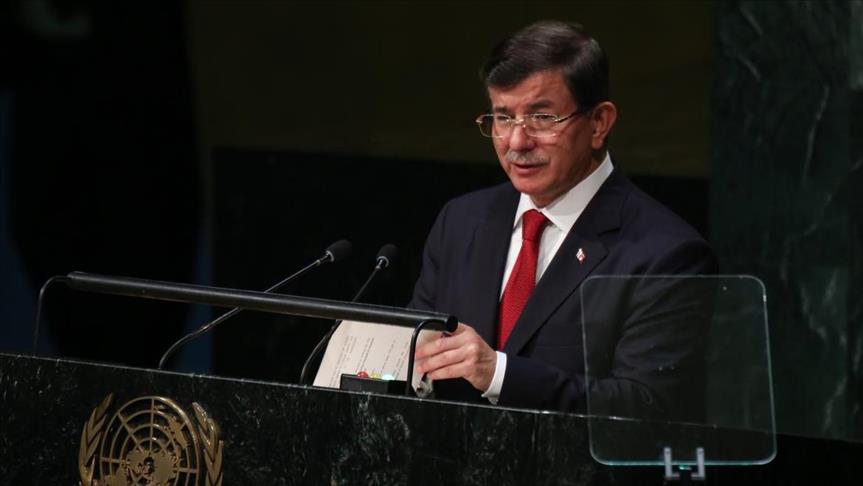
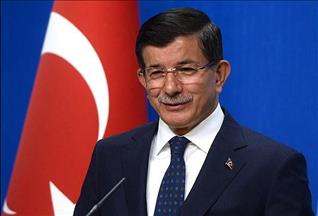
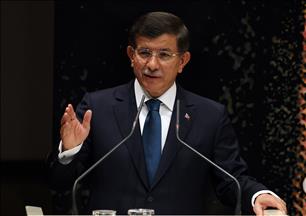
The World Humanitarian Summit in Istanbul will enable the global community to voice common commitments for humanity's future, Turkish Prime Minister Ahmet Davutoglu said Wednesday.
Speaking at a high-level event on the margins of UN General Assembly meetings, Davutoglu said the first summit to be held in May 2016 would provide the world community with a chance to take its long-awaited humanitarian responsibilities in a holistic manner.
"We may be members of different groups such as G-7, G-20, G-77, etc. But this time let us come together and act as G-All," Davutoglu said. "So that no kids like Aylan Kurdi face such tragedies again."
He was referring to the 3-year-old Syrian boy whose body washed up on a Turkish beach earlier this month.
Pictures of the toddler’s lifeless body went viral on social media, causing international outrage and frustration at the international community's failure to help desperate families in Syria
"I firmly believe in a principle. Any diplomacy that does not touch the souls of the human beings, that does not speak to human conscience and that does not have an humanitarian essence will not bring lasting solutions," Davutoglu said.
"As the Turkish saying goes, we cannot eat when our neighbor is hungry. We cannot sleep in peace if a baby is shivering outside the perimeter of our walls."
Turkey currently hosts more refugees than any other nation, according to the UN. With $3.5 billion of official development aid and $1.6 billion of overseas humanitarian assistance, it is the third largest humanitarian donor in the world.
"Summit outcomes jointly endorsed by all humanitarian actors [and] should clearly set the future agenda for the international community while identifying the issues to be followed up," Davutoglu said. "It would be timely to focus on the search for new financing modalities at the global level to respond to humanitarian emergencies without delay.”
He said the summit would also provide an opportunity for addressing the current migration crisis with particular emphasis on assisting refugees and their host countries.
"We should not turn our backs to the fundamental rights of these people who cannot be held responsible for what they are going through. Otherwise the universal values such as democracy, human rights, freedom and peace will inevitably be the next victims of our indifference," he said.
The region is facing its biggest refugee crisis in decades, with thousands of asylum seekers from Middle Eastern and African countries trying to flee war and persecution.
The majority of these asylum seekers are Syrian refugees who are trying to flee a civil war that has claimed more than 250,000 lives since 2011 and resulted in one of the largest refugee exoduses since the Second World War.
As of mid-2015, almost one in two Syrian refugees in the region was hosted by Turkey, which hosts more than 2 million registered Syrian refugees, according to the UN.
"In hosting so many refugees from the crisis [in Syria] – more than 2 million people - Turkey has demonstrated admirable commitment to humanitarian action", UN Secretary-General Ban Ki-moon said.
"The summit is a vital opportunity to reinforce our common endeavor to save lives, and prevent and alleviate suffering," he said.
UN humanitarian affairs chief Stephen O'Brien said the conference should initiate a set of concrete actions aimed at enabling all stakeholders to better prepare for and respond to crises and be more resilient to shocks.
"The summit is also a departure point for progress. It will ensure the global humanitarian action keeps pace with new challenges and opportunities of our rapidly evolving world", he added.