ANKARA
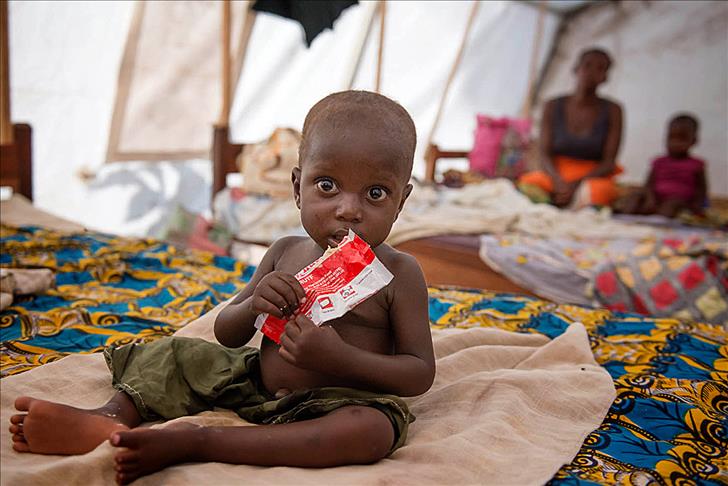
The number of hungry people in the world has dropped by 216 million over the last 20 years but one person in nine is still undernourished.
New data from the United Nations, released Tuesday, said 795 million people still suffer from hunger.
The State of Food Insecurity in the World 2015 report said access to food had improved in East Asia and very fast progress was posted in Latin America and the Caribbean.
Reasons given for the regional improvements were “inclusive economic growth, agricultural investments and social protection, along with political stability."
Some developing countries had reached UN targets for eliminating hunger. Seventy-two out of 129 nations monitored had achieved UN goals on hunger and another 29 were “on track” to reach these by 2015.
The report – compiled by the Food and Agriculture Organization, International Fund for Agricultural Development and World Food Programme – said Sub-Saharan Africa is the region with the highest prevalence of undernourishment in the world – at 23.2 percent, this is almost one in every four people.
“Extreme weather events, natural disasters, political instability and civil strife have all impeded progress – 24 African countries currently face food crises, twice as many as in 1990; around one of every five of the world’s undernourished lives in crisis environments characterized by weak governance and acute vulnerability to death and disease,” the report said.
However, African nations that invested more in improving agricultural productivity and basic infrastructure had also achieved their UN Millennium Development Goals hunger target, notably in West Africa.
The proportion of hungry people in Latin America and the Caribbean has dropped from 14.7 percent to 5.5 percent since 1990, while the share of underweight children (below five years of age) also declined sharply.
The UN said several factors played a critical role in achieving the hunger targets.
"While economic growth is always beneficial, not least because it expands the fiscal revenue base necessary to fund social transfers and other assistance programmes, it needs to be inclusive to help reduce hunger."
“Inclusive growth provides a proven avenue for those with fewer assets and skills in boosting their incomes, and providing them the resilience they need to weather natural and man-made shocks," the report added.
“We must be the 'Zero Hunger' generation. That goal should be mainstreamed into all policy interventions and at the heart of the new sustainable development agenda to be established this year," Jose Graziano da Silva, General Director of the UN's Food and Agriculture Organization said.