BERLIN
The United Nations has expressed concern over growing support for racist and Islamophobic movements in Germany and urged the government to take stronger measures against racist violence and discrimination.
The U.N. Committee on the Elimination of All Forms of Racial Discrimination, or CERD, released Friday its report on the human rights situation in Germany, following a periodic review meeting in Geneva last week, with the participation of government and NGO representatives.
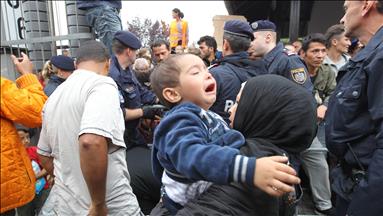
CERD voiced concern over growing support in Germany for anti-immigration populist parties, anti-Islam movements like PEGIDA and a dramatic increase in attacks on the asylum centers by far-right groups.
"The Committee is greatly concerned at the proliferation and dissemination of racist ideas by certain political parties and movements and the lack of efficient measures taken to strongly sanction and deter such discourses and behaviors," CERD said in its report.
"The Committee is concerned at the increase of consequences that such discourses have on racially motivated acts, including violence, against groups protected under the Convention," it added.
Rise of PEGIDA
Anti-migrant sentiment has increased in Germany in recent months with thousands attending marches organized by PEGIDA, a right-wing group opposed to immigration and the ‘Islamization’ of Europe.
PEGIDA inspired dozens of copycat groups in other major German cities and mobilized thousands, benefiting from growing fear of Islam.
Far-right extremists carried out 162 attacks against asylum seekers and their houses in 2014, according to police records. There were 58 such attacks in 2013.
‘Anti-Muslim racism’
The U.N. committee underlined in its report that racism problem was not limited to the far-right and populist groups in Germany but also had structural and institutional aspects.
"Institutional anti-Muslim racism" remained a problem in the country, the report said, pointing out discrimination faced by Muslim children at schools, and Muslims in accessing work opportunities.
It recommended government to take concrete measures to address the problem, including awareness raising programs at schools and campaigns in the media as well as training for public officials on combatting racial-discrimination.
The committee also demanded from Germany to prepare a separate statistical record of racist and Islamophobic hate speech and violence.
Unresolved neo-Nazi murders
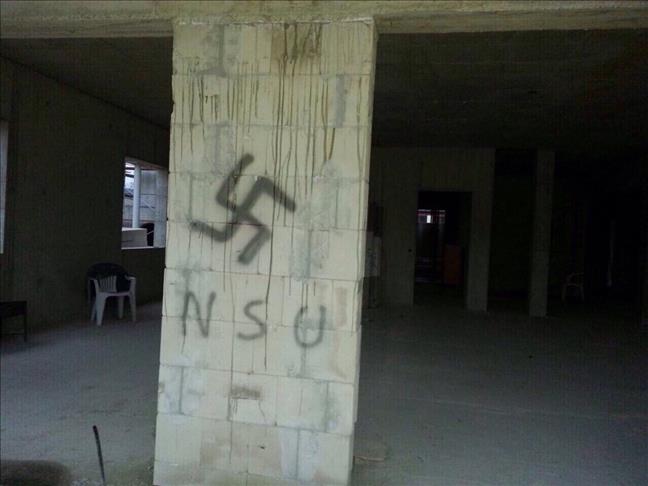
The UN committee sharply criticized German authorities for failing to effectively investigate a series of murders committed by the shadowy far-right terror cell NSU.
"The Committee remains concerned at the State party’s [Germany’s] continued failure to recognize its systemic shortcomings in identifying and handling the racial motivation behind such acts, which may mask institutional racism," the report said.
The NSU killed at least eight Turkish immigrants, a Greek worker and a German policewoman between 2000 and 2007, all apparently without arousing the suspicions of the German police or its intelligence services.
The German public first learned about the existence of NSU in November 2011, when two members of the group reportedly died in a murder-suicide following an unsuccessful bank robbery.
Until 2011, Germany’s police and intelligence service excluded any racial motive for the murders and instead treated immigrant families as suspects in the case and harassed them for alleged connections with mafia groups and drug traffickers.
The committee demanded a deeper investigation into the murders.
"[Germany should] take all necessary measures to unveil the remaining dimensions and scope of the NSU movement, its affiliations and the threat it may still pose today," the report said.
The NSU scandal shocked the German public and sparked a debate on German security and intelligence organizations which were sharply criticized for underestimating the far-right threat.
The destruction of dozens of domestic intelligence secret files on far-right movements, soon after the disclosure of the NSU in November 2011, raised fears that domestic intelligence agents or staff and members of the NSU could be connected.
The domestic intelligence agency BfV has repeatedly denied there have been any relationships between its staff and agents and the NSU murders.