ADDIS ABABA, Ethiopia
As the world gears up to mark World Refugee Day on Saturday, the UN’s refugee agency (UNHCR) has warned that the financial requirements needed to fund its refugee operations in Africa remain largely unmet.
“Only 29 percent of the $315 million budget requested for relief operations for 2015 has been received,” Kisut Gebregziabher, the agency’s spokesman in Ethiopia told Anadolu Agency on Friday. “This has created a big [funding] gap, forcing us to focus only on the provision of basic necessities.”
“We would have been able to implement long-term rehabilitation and support programs, such as career training, had the requirements been met,” Gebregziabher added.
The UNHCR recently issued a statement in which it put the number of refugees worldwide at a whopping 60 million.
Turkey is now the world’s largest recipient of refugees, currently hosting more than 1.5 million Syrians who have fled the violence in their home country.
“There have been 15 separate cases of conflict in the world over the past five years,” the UNHCR spokesman said. “This has resulted in resources being overstretched.”
-Ethiopia, S. Sudan
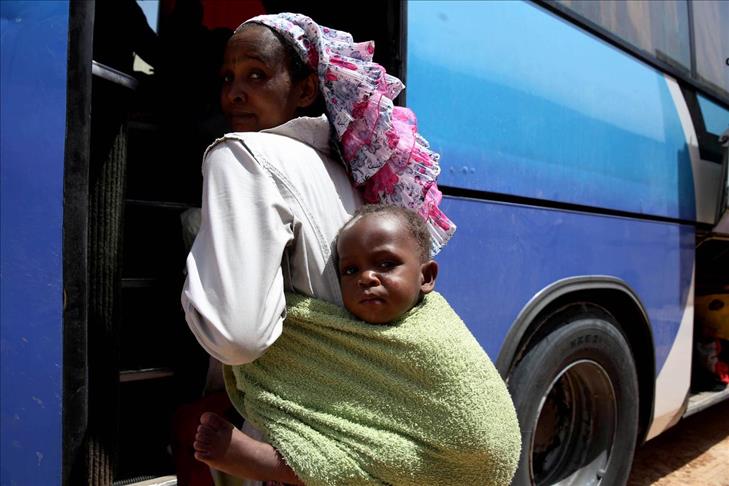
Ethiopia, meanwhile, represents Africa’s largest host country for refugees, nearly 700,000 of whom currently reside at various camps scattered across the country.
These include 273,143 refugees from South Sudan; 247,000 from Somalia; 136,246 from Eritrea; 36,600 from Sudan; and 5,700 from various other countries, including war-torn Yemen, according to Gebregziabher.
Most South Sudanese refugees in Ethiopia have crossed the border since December of 2013, when civil war erupted in the nascent, oil-rich nation.
“Due to the escalation of conflicts over the past two months, the number of South Sudanese entering Ethiopia each month dramatically grew to 6,200 in May, from an average of only 1,000 before April,” Gebregziabher said.
He added that a total of 4,800 refugees had entered Ethiopia – from various countries, including South Sudan – in April.
According to aid agencies, war, political persecution and economic difficulties represent the main reasons for the recent influx of refugees.