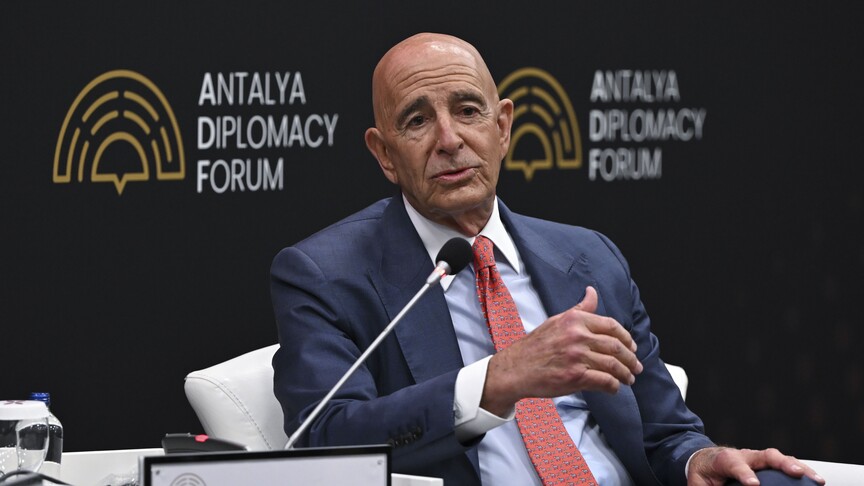
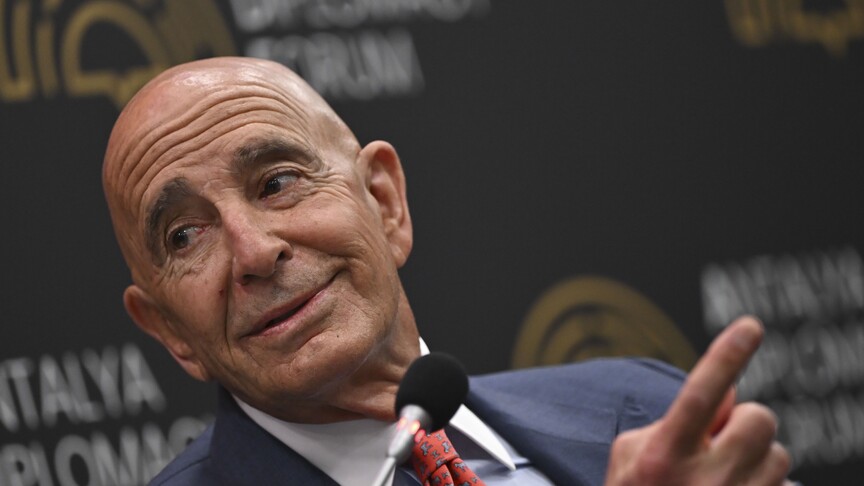
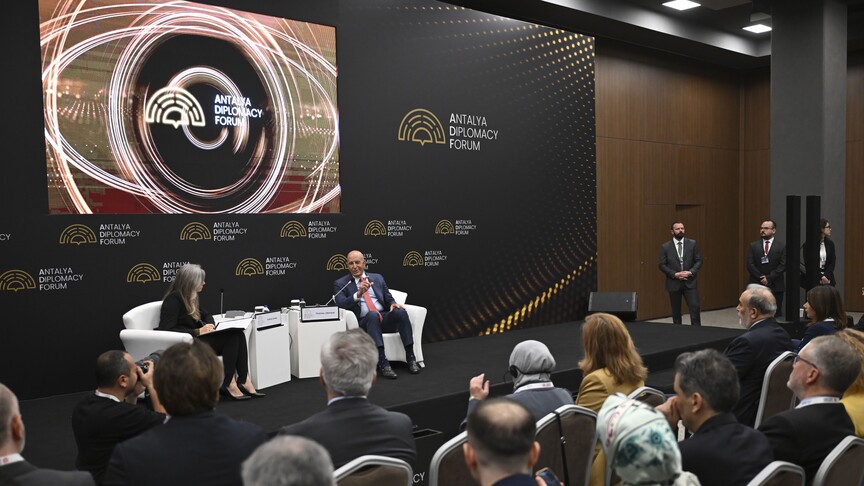
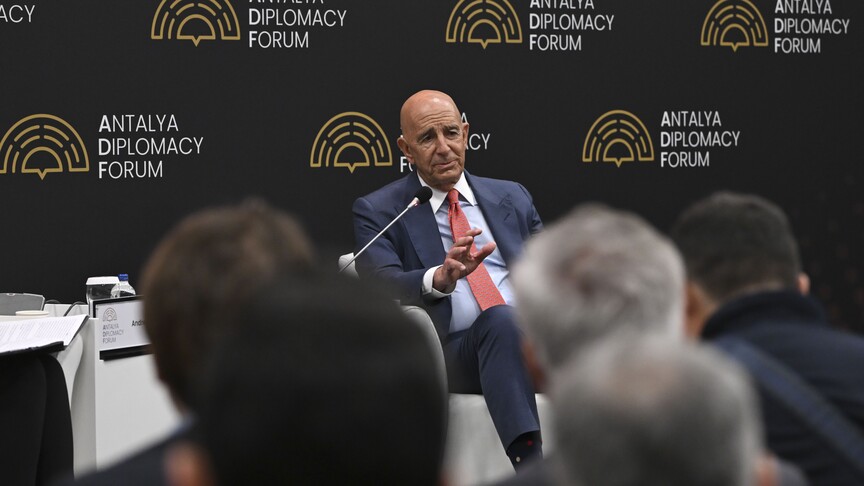
US Ambassador to Türkiye and Special Envoy for Syria Tom Barrack said Washington exerts influence "where necessary," regarding ongoing diplomatic efforts, including Syria-Israel talks.
Speaking to Anadolu at Antalya Diplomacy Forum in Türkiye, Barrack said: “What you know and what you've seen is my boss exerts his influence where he feels that it's necessary,” Barrack said, referring to US President Donald Trump.
He added that this approach aligns with a broader vision of “diplomatic equality” and “peace through power and prosperity.”
His remarks came after Syrian President Ahmed al-Sharaa told Anadolu that talks with Israel have not reached a dead end but are progressing with great difficulty due to Israel’s insistence on maintaining a presence on Syrian soil.
Barrack acknowledged the challenges, saying negotiations are “progressing, but there’s great difficulty,” without elaborating further on any specific sticking points.
He expressed confidence in the US negotiating team, describing it as “the best negotiating team we have in America,” and said Washington aims to “do the best thing for the world.”
“For these multilateral organizations … regions handling their own problems first is the ultimate result of our America First program,” he said, adding: “It’s not America first and the world gets badly. It’s America first, and everybody should look at their own countries the same.”
On Syria specifically, Barrack pointed to cautious optimism on the ground, saying: “What is important is now the people on the street start feeling something other than hope … which is happening,” suggesting early signs of tangible change.
He framed Syria as part of a broader geopolitical test case involving multiple global actors: “The experiment that we have … plus America, plus Russia, plus China … all using this as a laboratory of can we have a new kind of a nation in the middle of the Middle East is happening.”
Highlighting a broader geopolitical shift, Barrack said the international system is undergoing a “realignment” toward a new order in which regions take the lead in addressing their own issues.
“Let the regions handle their own issues and problems. We will intervene when necessary,” he said, adding that the post-1945 model of global security guarantees is changing and “everybody needs to be responsible for themselves.”
Barrack also voiced optimism about developments in Syria, saying there is growing hope on the ground and describing the country as part of a wider “experiment” involving global and regional powers seeking a new model for stability in the Middle East.
“I’m really hopeful,” he said.
On Syria’s internal dynamics, Barrack pointed to what he described as a potential “alignment” between different communities, including the Druze, and neighboring countries, calling it “the best opportunity … seen in the last hundred years.”
He added that Jordan has played a constructive role by offering a “roadmap” to help address ongoing challenges.
“The teams are doing their best,” Barrack said. “I think we’ll get there.”