WASHINGTON (AA) - As Washington and Brussels continue negotiations on a potential free trade deal, a World Bank official has offered his support for Turkey’s inclusion.
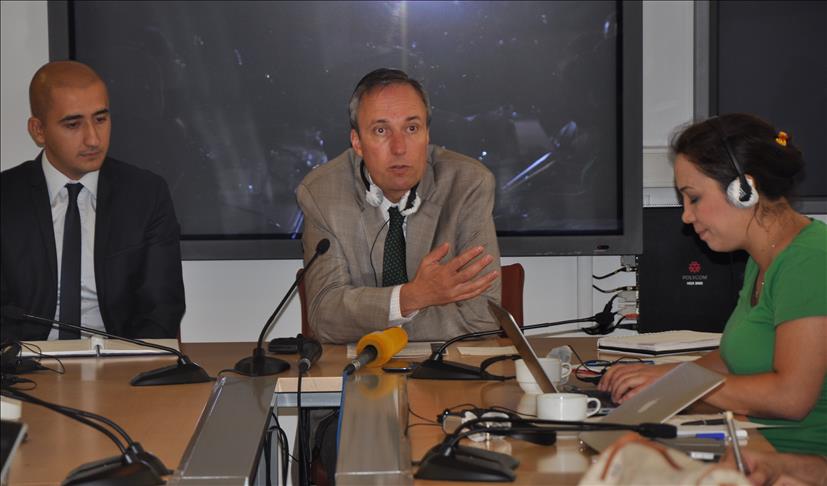
Speaking in an exclusive interview with the Anadolu Agency, Martin Raiser, country director for Turkey at the World Bank, said that the organization is "strongly supportive" of the efforts of Turkey to be included in the Transatlantic Trade and Investment Partnership (TTIP).
"Turkey, I think, is perfectly right in wishing to be part of what would then be the greatest free trading block in the world economy,” said Mr Raiser.
He added: "There are some benefits from this too, because unlike the Customs Union with the European Union, which Turkey already has, the free trade agreement between the US and Europe is likely to cover services, it may cover agriculture, which are currently excluded. It will cover public procurement rules. These are areas in which Turkey would benefit from greater trade liberalization with its partners."
Raiser believes Turkey's inclusion would enhance The country's market access and further strengthen the structural foundations for growth.
"We’re strongly supportive of the notion that Turkey should be part of this. How the negotiations are sequenced between these three partners is something that is, of course, of great interest to Turkey," he said.
-Risks remain for Turkey despite positive structural reforms
Of particular importance for Turkey as it seeks to ensure continued economic stability will be a shift towards international competitiveness, said Raiser.
"We have a structural issue in Turkey, which is that the country, even at these lower growth rates that we’re now experiencing of three to four percent, still has a current account deficit well above six percent of GDP. And I think that’s something that, over the medium term, they really need to work on, both from the supply side, i.e. taking measures to improve their export competitiveness so that they can gain global market share and have more exports, and reducing their reliance on energy imports, but also from a macroeconomic management point of view, to ensure that domestic demand… that they rebalance their medium-term growth away from too much reliance on domestic demand,” he said.
By Michael Hernandez