Hussien Elkabany, Rania Abushamala
21 August 2026•Update: 21 August 2026
Egypt said Friday that construction of Tanzania’s Julius Nyerere hydropower project by an Egyptian consortium served to belie claims that Cairo opposes development in African and Nile Basin countries.
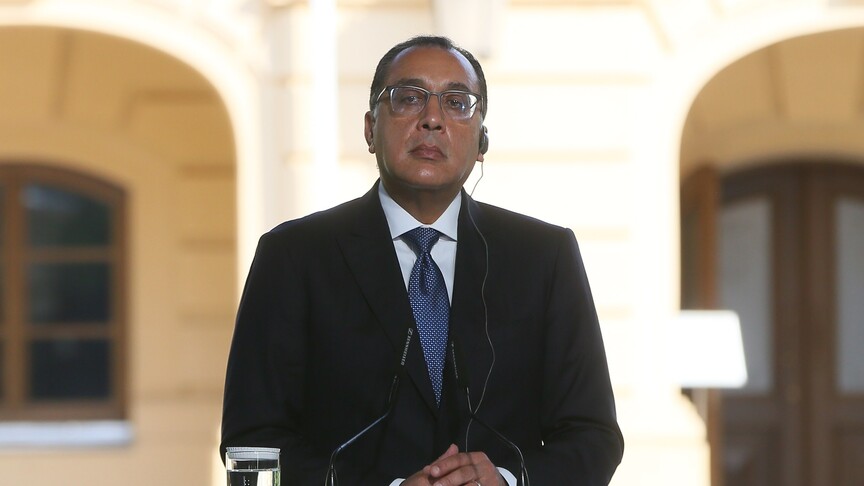
Prime Minister Mostafa Madbouly made the remarks while visiting Tanzania to attend the project’s inauguration on Saturday.
According to a government statement, the project was carried out by a consortium including Egyptian firms Elsewedy Electric and Arab Contractors.
Madbouly said that the project demonstrates the ability of Egyptian companies to carry out major development projects across Africa.
The new hydropower facility aims to meet Tanzania’s energy needs by generating 2,115 megawatts of electricity, he added.
Madbouly said that construction took nearly five years and involved a 12,000-strong workforce, including 1,700 Egyptian engineers and technicians.
“The success of the Julius Nyerere dam and hydropower plant refutes previous claims that Egypt opposes development in Nile Basin countries,” he said.
He stressed Cairo’s commitment to “safeguarding its rights in the Nile River while continuing to support development in fellow Nile Basin countries in a manner that serves common interests.”
His remarks came amid a longstanding dispute between Egypt and Ethiopia over Addis Ababa’s plan to build additional dams on the Nile.
Ethiopia insists it has the sovereign right to undertake water projects without securing approval from other countries, while Egypt rejects any unilateral measures that it fears could affect its share of Nile water.
The tensions are rooted in a long-running dispute over Addis Ababa’s Grand Ethiopian Renaissance Dam.
On Thursday, Ethiopian Water and Energy Minister Habtamu Itefa said his country would build further dams whenever deemed necessary.
A day earlier, Egyptian Foreign Minister Badr Abdelatty said in televised remarks that Cairo would “not allow construction of additional dams on the Nile.”
Last week, Egyptian state media quoted an Egyptian official as saying that Ethiopian statements about building additional dams -- and controlling water flows to downstream states -- were “not recognized under international law,” adding that Cairo would not allow them to be realized as a fait accompli.
Egypt, Ethiopia and Sudan have yet to reach an agreement on the Grand Ethiopian Renaissance Dam.
Negotiations among the three countries were frozen for nearly three years before resuming in 2023 and stalling again the following year.
The Nile Basin is shared by 11 countries: Burundi, Rwanda, the Democratic Republic of Congo, Kenya, Uganda, Tanzania, Ethiopia, Eritrea, South Sudan, Sudan and Egypt.