Ahmet Salih Alacaci
06 November 2026•Update: 06 November 2026
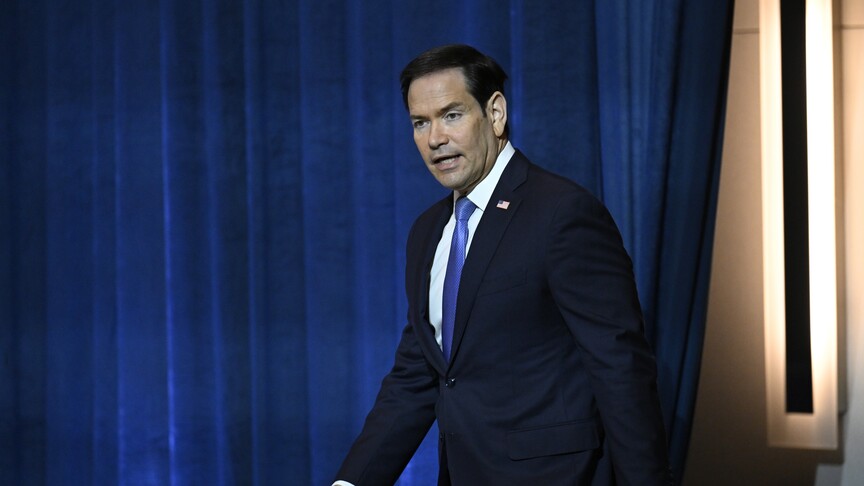
US Secretary of State Marco Rubio said Thursday that elections in Venezuela would “ideally” take place next year but warned that significant institutional reforms must come first, according to The New York Times.
In an interview with The Times at the White House, Rubio said Washington was working to support Venezuela’s transition to democracy but declined to guarantee elections would be held before President Donald Trump leaves office.
He identified the replacement of Venezuela’s Supreme Court and electoral council, reforms to its security forces and progress on restructuring its national debt as key priorities. “I think people will be happy the way this turns out and the trajectory that it’s on,” the report quoted him as saying.
Rubio said US-backed negotiations between Venezuela’s interim government and opposition representatives were expected to produce a reformed Supreme Court by mid-December.
Negotiators are also expected to meet next week to discuss appointing new electoral council members, he said.
Rubio stressed the importance of securing support from Venezuela’s armed forces for any future government, warning that the military’s cooperation would be essential to political stability.
“You got to have the buy-in of the security forces in any country in the world, because that’s what you’re going to need to govern,” he said.
He also highlighted Venezuela’s debt burden, estimated at more than $200 billion, as a major obstacle to economic recovery and foreign investment.
A US official told the newspaper that debt restructuring was important for eventually lifting sweeping American sanctions, partly because creditors could otherwise seek to seize Venezuelan assets.
Separately, Rubio expressed support for expanding military cooperation between Washington and Caracas, including a potential agreement establishing legal protections for US troops operating in Venezuela.
He said the two governments had not yet discussed the proposed arrangement in detail but suggested closer security cooperation could improve Venezuelan forces’ capabilities.
The US carried out a military operation in Venezuela on Jan. 3, seizing President Maduro and his wife Cilia Flores. Trump said his administration would “run” Venezuela and its oil assets during a transition period.
Then-Vice President Delcy Rodriguez was sworn in as interim president on Jan. 5, taking the oath before the National Assembly two days after the capture.