Yasin Gungor
15 November 2026•Update: 15 November 2026
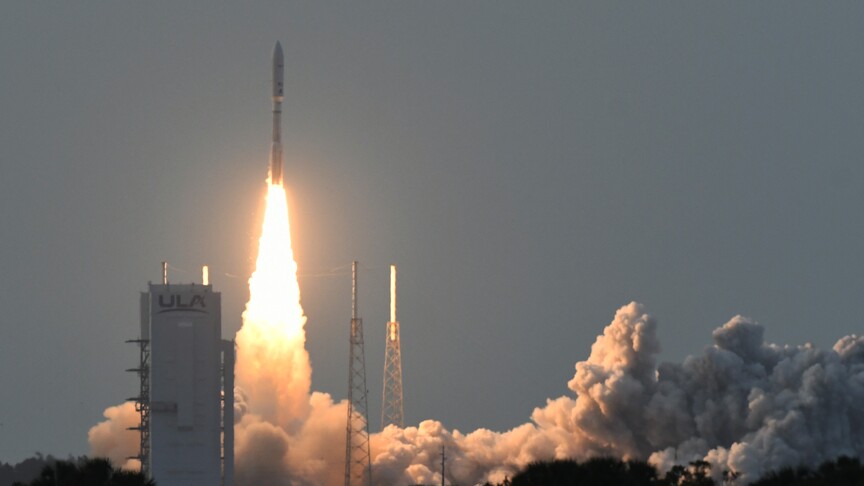
American launch service provider United Launch Alliance (ULA) said Sunday that its Vulcan rocket failed to deliver 40 Amazon Leo broadband satellites into orbit after suffering an in-flight anomaly shortly after liftoff from Florida.
"Today, we did not meet that standard," ULA, a joint venture formed in 2006 between Lockheed Martin Space and Boeing Defense, Space & Security, said in a statement, referring to its benchmark for mission success.
The heavy-lift vehicle lifted off at 1740GMT from Space Launch Complex 41 at Cape Canaveral Space Force Station in Florida, clearing the launch tower before experiencing the malfunction roughly 10 minutes into the flight.
Data received by the launch director confirmed that the rocket failed to place the payload into low Earth orbit, where the satellites were intended to expand the Amazon Leo broadband constellation.
Company officials acknowledged that they lacked immediate technical details regarding what went wrong, saying: "Since the anomaly just occurred, we don't have any specific data yet to understand what occurred today."
ULA pledged full transparency and committed to working closely with Amazon and relevant authorities to identify the root cause, implement corrective measures and resume launches as quickly as possible.
Amazon Leo acknowledged the setback while expressing confidence in its launch provider, noting that risk accompanies any spaceflight, particularly during inaugural missions such as LV-01.
"ULA has been a trusted partner for Amazon, and we believe they’ll learn from this mission and deliver on their long-term plans for Vulcan," the company said.
The mission marked ULA's first Vulcan flight in nine months. The exact technical cause of the failure and a revised schedule for returning the rocket to flight remain undisclosed.