Gokhan Ergocun
25 July 2026•Update: 25 July 2026
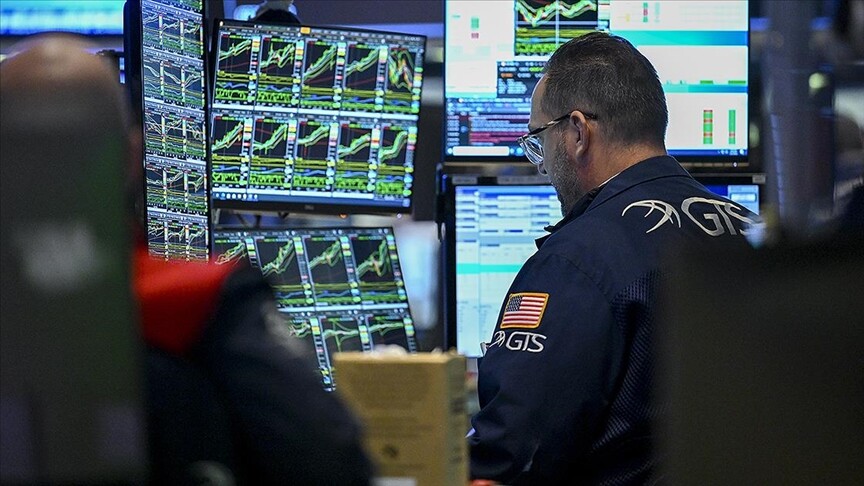
The New York Stock Exchange ended the week with mixed results as investors focused on corporate balance sheets, geopolitical developments in the Middle East, and the new tariffs announced by the US administration.
The Dow Jones industrial average rose 0.46%, or 235.6 points, to close at 51,947.25.
The S&P 500 increased slightly 0.05%, or 3.68 points, to finish at 7,411.98, while the Nasdaq Composite lost 0.64%, or 161.87 points, to end the day at 24,975.82.
The Volatility Index (VIX), often referred to as the market’s “fear index,” eased by 0.59% to 18.59.
Concerns, related to rising capital expenditures on AI investments—resurfaced, compounded by uncertainty stemming from tensions in the Middle East, continued to be main agenda item on Friday.
Intel, which released its earnings report after the market closed on Thursday, joined the ranks of US tech companies that announced their financial results this week.
US chipmaker Intel’s revenue rose 25% year-over-year in the second quarter of this year.
The company reported that its revenue forecast for the third quarter of this year is in the range of $15.8 billion to $16.8 billion.
Although Intel’s second-quarter financial results exceeded expectations, its shares fell 7.9%.
Analysts noted that following the earnings reports released this week by Alphabet, Tesla, IBM, and Intel, Microsoft, Meta, Amazon, and Apple’s financial results will be closely watched next week.
Meanwhile, the Trump administration in the US announced that, as a result of investigations conducted under Section 301 of the 1974 Trade Act—on the grounds that it had failed to effectively ban the import of goods produced through forced labor and enforce that ban—it would impose tariffs of 10% or 12.5% on 60 of the country’s trading partners.
The Trump administration’s latest move came shortly before the expiration of the 150-day, 10% temporary global tariffs—which were implemented on February 24 under Section 122 following the US Supreme Court’s ruling that tariffs imposed under the International Emergency Economic Powers Act (IEEPA) were unlawful.
In addition, Trump criticized the European Union for imposing fines on American technology companies and announced that an investigation would be launched against the bloc under Section 301, with the possibility of tariffs being imposed.
Geopolitical developments also remained a focus for investors.
Oil prices, which had risen during the week amid concerns that conflicts in the Middle East could disrupt energy supplies, retreated slightly today.
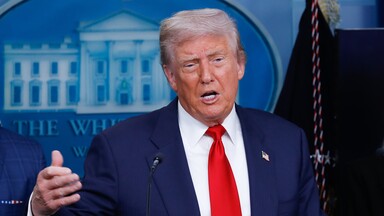
US President Donald Trump stated that he had not yet decided whether to launch a "large-scale" attack against Iran, noting that Iran had adopted a more serious stance in the negotiations.
On the macroeconomic data front, while the US manufacturing Purchasing Managers’ Index (PMI) fell short of expectations in July, the services sector strengthened.
The manufacturing PMI fell to 53.8 in July—its lowest level in four months—while the services sector PMI rose to 53.6, its highest level in eight months.
European markets
European stocks saw increases, with the pan-European Stoxx Europe 600 index increased 0.82% to close at 644.51 points.
The UK’s FTSE 100 earned 0.91% to 10,736.23, Germany’s DAX 40 rose 1.36% to 25,099.00 points, while France’s CAC 40 went up by 0.88% to 8,372.28.
Italy’s FTSE MIB 30 increased 0.95% to 51,802.23 points, and Spain’s IBEX 35 rose 1.65% to 19,585.40 points.