- Nepal-China border flash floods among deadliest disasters to strike continent this year, with hundreds dead or missing
- Typhoons, monsoon floods, earthquakes, and landslides have caused widespread destruction from Indonesia to China and South Asia
Catastrophic flash floods along the Nepal-China border have become one of Asia's deadliest natural disasters of 2026, adding to a year already marked by destructive earthquakes, landslides, typhoons, and severe flooding across the continent.
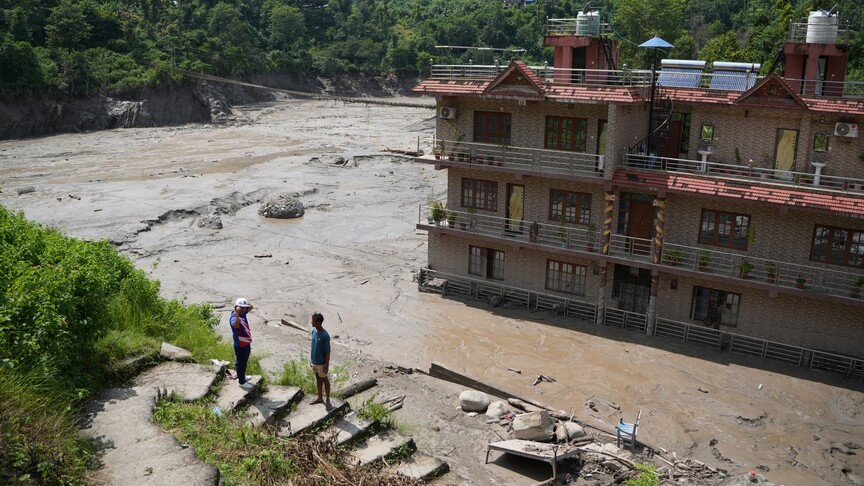
The floods struck the Himalayan border region on Wednesday after a massive collapse of glacial ice, rock, and debris sent a wall of water and mud through mountain valleys, destroying villages, roads, bridges, and power infrastructure.
Search and rescue operations continued Thursday, with at least 362 deaths and more than 1,300 people reported missing in Nepal and China's Tibet region.
The disaster follows a series of deadly natural calamities across Asia since the beginning of the year.
Here is a timeline of some of the major natural disasters in Asia since Jan. 1, beginning with the latest:
Aug. 26, Nepal-China border: Catastrophic flash floods
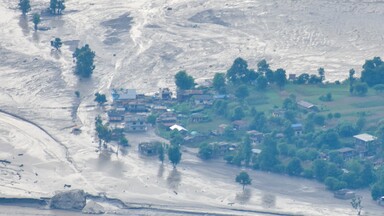
Massive flash floods sweep through the Himalayan border region between Nepal and China's Tibet Autonomous Region after a glacier collapse sends ice, rock, mud, and water into the Lhende Khola and Bhotekoshi river system.
At least 362 people are confirmed dead, including 359 on the Nepalese side of the border, by Thursday, while more than 1,300 remain missing, according to official figures.
Villages are inundated, and houses, roads, bridges, and power projects are swept away, while the disaster severely damages the route connecting Kathmandu with Lhasa and the Gyirong border crossing.
Hundreds of foreign tourists and pilgrims are among those missing, including nationals of India, the US, Ukraine, Malaysia, Australia, Britain, and Canada.
Aug. 15, Indonesia: Powerful earthquake strikes eastern islands
A 7.7 magnitude earthquake strikes off the northern coast of Indonesia's Flores Island, affecting communities across East Nusa Tenggara.
At least 47 people are killed as buildings collapse and landslides block roads in several areas.
Hundreds of houses, dozens of schools, and health facilities are damaged, while thousands of residents evacuate their homes.
Authorities initially issue a tsunami warning, which is later lifted.
July 28, Japan earthquake
At least 39 people are killed as a 6.8 magnitude earthquake strikes southwestern Kumamoto province on Kyushu Island of Japan. Dozens of others are wounded.
July 26, China: Flash floods hit Gansu province
Flash floods sweep through parts of northwestern China's Gansu province following intense rainfall.
At least 25 people are killed and 23 others injured.
Floodwaters and debris hit communities and a scenic area in Weiyuan County, while rescue teams are deployed to search damaged areas.
July 17, China: Deadly Chongqing landslide
A massive landslide strikes Pengshui Miao and Tujia Autonomous County in southwestern China's Chongqing municipality.
Authorities later confirm at least 51 people dead, with 10 others missing.
The landslide buries buildings and cuts through communities along the Wujiang River, prompting a large-scale search and rescue operation.
Early July, China: Typhoon Maysak and floods
Typhoon Maysak brings exceptionally heavy rainfall to China's southwestern Guangxi region, causing severe flooding and reservoir failures.
At least 159 people are killed, making it one of China's deadliest weather disasters of the year, while 10 others remain missing.
At least 107 of the victims die following breaches at reservoirs, according to Chinese authorities.
Cities are flooded and infrastructure damaged after what authorities describe as historically rare, widespread, and persistent rainfall.
July, India: Assam floods
Torrential monsoon rains cause rivers to overflow across India's northeastern Assam state, inundating large areas.
The death toll surpasses 40 by late July and subsequently exceeds 100 as flooding and related disasters continue.
More than 1 million people are affected at the height of the disaster, with thousands of villages inundated and large areas of farmland destroyed.
Roads, bridges, homes, and other infrastructure are damaged as rescue teams evacuate residents from flooded communities.
July 20, Afghanistan: Nuristan flash floods
Sudden flash floods triggered by heavy monsoon rain sweep through Afghanistan's mountainous northeastern Nuristan province.
At least 20 people are killed, more than 80 injured, and around 100 reported missing in initial assessments.
Homes, shops, and other buildings are destroyed in Parun, the provincial capital, and surrounding communities.
July 11, Bangladesh: Floods and landslides
Days of torrential monsoon rain trigger severe floods and landslides across southeastern Bangladesh.
At least 44 people are killed.
More than 1 million people are left stranded as floodwaters inundate communities and disrupt roads and communications.
Authorities deploy rescue teams and rush food and emergency supplies to affected districts.
May 16-19, China: Southern and central China floods
Torrential rainfall causes widespread flooding across southern and central China, including Guangxi, Guizhou, Hunan, and Hubei provinces.
At least 21 people are killed in separate flood-related incidents.
Thousands of residents are evacuated as rivers overflow, houses collapse, and roads and other infrastructure are damaged.
Some areas record exceptional rainfall, triggering flash floods and landslides.
March 25-30, Afghanistan and Pakistan: Heavy rain and flash floods
Several days of heavy rainfall trigger flash floods, landslides, and building collapses across Afghanistan and neighboring Pakistan.
At least 45 people are killed and 74 others injured across the two countries.
In Afghanistan, some 130 homes are completely destroyed and more than 1,100 families are affected, particularly in central and eastern provinces, including Parwan, Maidan Wardak, Daykundi, and Logar.
Jan. 24, Indonesia: West Java landslide
A massive landslide triggered by heavy rainfall strikes Pasir Langu village in West Bandung Regency, West Java.
The death toll eventually rises to 49, with 15 people still missing a week after the disaster.
Dozens of homes and plantations are buried or damaged after a natural dam formed upstream and collapsed, sending mud, sand, rocks, and timber downstream.
Twenty-three soldiers taking part in training are among those killed.