By Ovunc Kutlu
ANKARA
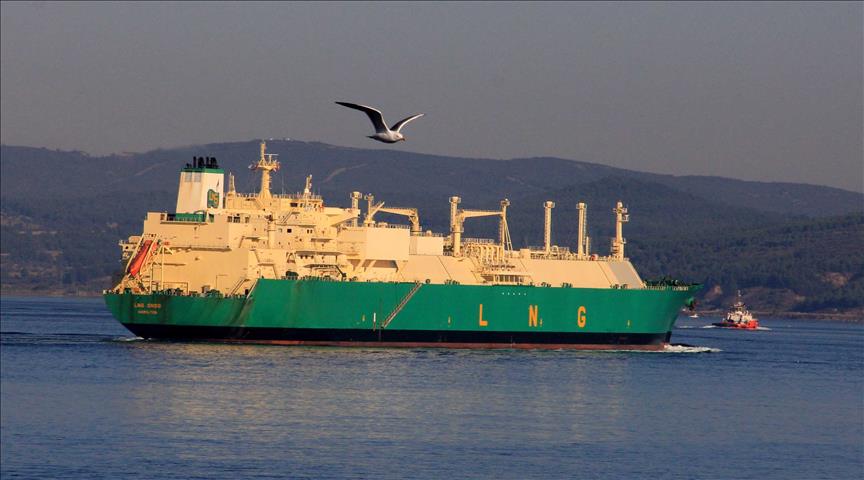
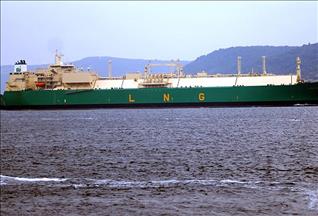
Japan's high demand for liquified natural gas (LNG) will decrease as the country's nuclear facilities are restored, but LNG will remain a significant part of Japan's energy mix, experts say.
The 2011 Fukushima nuclear disaster led Japan to rely mostly on fossil fuels, especially LNG, to meet its power needs.
Japan, the world's largest LNG importer, consumed 4.6 trillion cubic feet (130 billion cubic meters) of natural gas in 2012, about 58 percent above the 2000 level, according to the U.S. Energy Information Administration.
More than 95 percent of the country's LNG demand is met by imports, the U.S. agency says.
But the price of liquified natural gas is soaring.
"The cost of LNG dependency increased substantially after Fukushima because Japan started importing significantly greater volumes of LNG at a time when the price of LNG increased," said Christopher Goncalves, an energy expert at Berkeley Research Group, a global economic consulting firm.
Japan's LNG imports rose about 25 percent between 2010 and 2013, from nearly 3.4 trillion cubic feet (96 billion cubic meters) per year to 4.2 trillion cubic feet (119 billion cubic meters) per year, the U.S Energy Information Administration said.
At the same time, the import price of liquified natural gas rose from $9 per million British thermal unit before the nuclear disaster to over $16, the U.S. agency said.
"The total bill for Japanese LNG imports skyrocketed," Goncalves told the AA. "Japanese leaders are very concerned with the LNG costs and dependency on that fuel source."
He said Japanese leaders are considering a variety of measures, such as restoring the capacity of the country's closed nuclear plants.
Japan shut down all its nuclear power plants after the Fukushima accident to ensure safety and implement new regulations.
Other experts agreed that the country's need for liquified natural gas will decrease, although the country's nuclear capacity will not return to its previous level.
"Japanese LNG demand will go down as the nuclear stations start to come back," said Jonathan Stern, of the Oxford Institute for Energy Studies.
"There will be two plants coming back this year, maybe another three or four next year," he told the AA. "Probably, they can only bring 17-20 nuclear stations back out of about 54."
On Sept. 10th, Japan's nuclear watchdog granted permission to reopen Kyusyu Electric Power's Sendai nuclear power plant in the southeastern part of the country.
The design and safety features of Sendai were deemed to meet the new regulatory requirements, Japan's Nuclear Regulation Authority said in a news release.
"I think we have seen the high point of Japanese LNG demand, and from here on it will go down to roughly where it was before Fukushima," Stern said.
But he said that LNG would still be an important part of Japan's energy balance.
Japanese government is also considering permanently shutting down nuclear reactors that are more than 40 years old.
www.aa.com.tr/en