By Todd Crowell
TOKYO
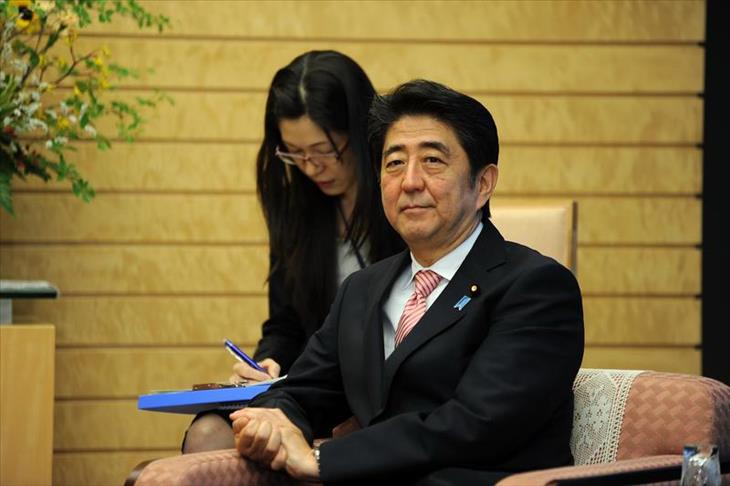
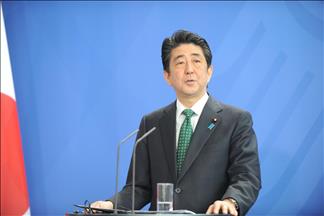
Since his re-election last December there has been growing interest and speculation as to what Prime Minister Shinzo Abe will say on the rapidly approaching 70th anniversary of the end of World War II.
How far will he go in recognizing, and apologizing for, Japan’s aggression during the war, especially for its invasion of China and its colonization of Korea? Will he even use the words?
Abe is known for his conservative, indeed revisionist, view on history. In past writings he has stopped short of describing Japan’s actions in the 1930s and 1940s as “aggression.” He has appointed people to prestigious institutions that hold similarly conservative views.
He has also angered Beijing by personally paying his respects at the Yasukuni Shrine, which honors Japan’s fallen soldiers but also includes 14 “Class A” war criminals accused of planning and waging “aggressive” war.
On the other hand, Abe is the steward of Japan’s foreign policy, especially relations with China and South Korea who profoundly distrust him. Japan’s relationships with these two countries are the lowest they’ve been in decades.
He knows that his words - to be released Friday - will be closely read in Beijing and Seoul to the extent of examining every phrase.
In 1995, on the 50th anniversary of the war’s end, then prime minister Tomiichi Murayama issued what was supposed to be the definitive apology for Japan’s actions during the war.
In it, he expressed Japan’s “deep remorse and heartfelt apology” for Japan’s “aggression”. Ten years later on the 60th anniversary of the surrender, former premier Junichiro Koizumi repeated the words.
Murayama recently came out of retirement to urge Abe not to enflame relations with neighbors by soft-pedaling Japan’s aggression during the war.
Since the beginning of the year a 16-person commission of notables that goes by the expansive name of “Advisory Panel on History and the 20th Century and the World Order in the 21st Century” have been meeting to advise Abe on the wording of his speech.
Released a week before the anniversary, the “history commission” traces much of the Japan’s post-war history with an emphasis on rapprochements with the United States and Europe.
The report also unambiguously labels Japan’s behavior as “aggression” that inflicted “grave damage” on the rest of Asia.
Any statement will reflect not just Abe’s personal views, but, officially approved by the cabinet, it will be treated as an expression of the entire country.
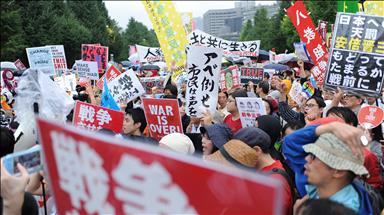
The statement comes at a time when parliament is debating two controversial security-related bills meant to allow Japan to cooperate with allies and participate more fully in international peacekeeping missions.
But critics of the legislation claim Abe is pushing passage of bills that would gut the country’s war-renouncing constitution.
In the week leading up to the anniversary, news outlets have speculated widely on the content of the statement. Many believe Abe will take a three-fold approach: 1) Express deep remorse for Japan’s actions, 2) Remind people of the Japan’s seven decades of peace, and 3) pledge future contributions for peace.
Abe is especially keen that the statement will be forward-looking and not just a rehash of previous statements.
Assuming that Abe finds the right words, it would help to reduce tensions with neighbors that might permit summit meetings with heads of state, including a bruited summit with China president Xi Jinping in September.