Övünç Kutlu,Gülbin Yıldırım
27 January 2016•Update: 28 January 2016
Bu Ovunc Kutlu and Gulbin Yildirim
NEW YORK
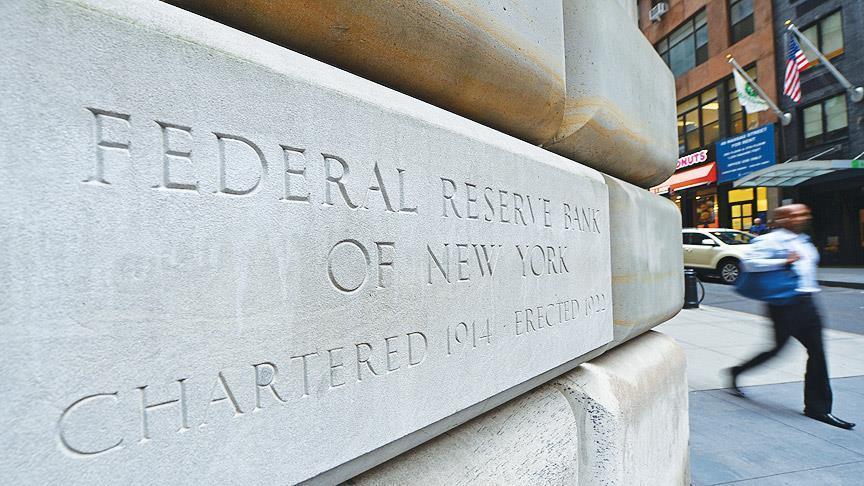
The U.S. Federal Reserve decided Wednesday to keep its benchmark interest rate range unchanged.
The U.S. Federal Open Market Committee (FOMC) said in a statement that it would hold steady the federal funds rate at 0.25-0.50 percent at the end of its two-day meeting.
"Given the economic outlook, the Committee decided to maintain the target range for the federal funds rate at 1/4 to 1/2 percent," the statement read, adding FOMC will continue to "assess realized and expected economic conditions relative to its objectives of maximum employment and 2 percent inflation”.
The Fed noted that U.S. economic growth slowed late last year, and said rate hike decisions this year will depend on the country’s economic outlook and data from the domestic economy, such as labor market conditions, job growth, unemployment and price levels.
The FOMC plans to continue to closely monitor global economic and financial developments and their implications for the U.S. labor market and inflation.
Last month, the Fed increased the benchmark Federal Funds rate to 0.50 percent from 0.25 percent, marking the first rate hike in almost a decade.
Median projections made by Fed committee members suggested that the group could have increased interest rates four times this year.
But analysts now expect increases could be limited to only one, if any, during 2016.
Experts told Anadolu Agency that the Fed's first rate hike could come as late as December, due to slower than expected growth in the U.S. and global economy, falling commodity prices and political instability around the world.
"The more negative economic and market events we see, the less likely are multiple increases in interest rates for 2016," said Daniel R. Amerman, a financial analyst.
Economics professor Steve Hanke agreed.
"The rest of the world is facing all kind of headwinds and problems,” said Hanke, who teaches at Johns Hopkins University. “All these international headwinds will make the Fed wait longer before they do something," he added.