Nuran Erkul
25 June 2026•Update: 25 June 2026
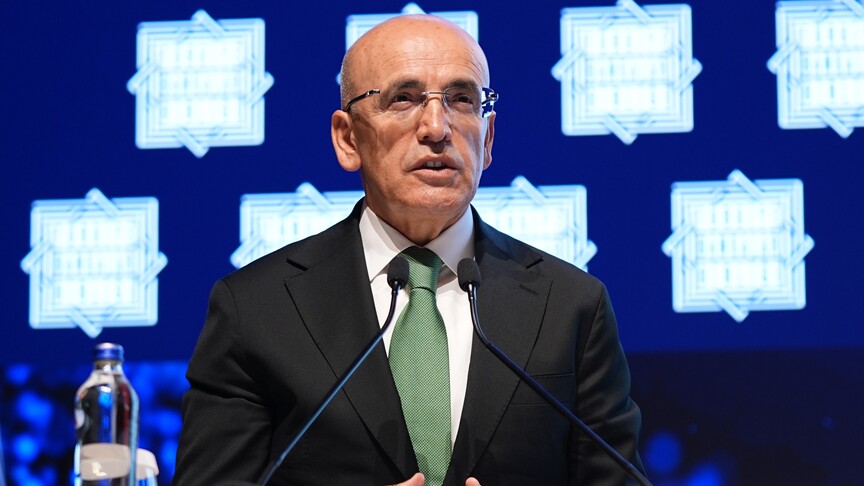
Turkish Treasury and Finance Minister Mehmet Simsek said climate action is not only an environmental priority but also essential for protecting growth, stability and prosperity.
“Climate action is not just about protecting the environment. It is about protecting growth, stability and prosperity,” Simsek said at the Net Zero Delivery Summit, held as part of London Climate Action Week.
Simsek said climate discussions over the past decade had focused mainly on targets and commitments, but the priority must now shift to implementation.
“Most countries already have ambitious targets. The real question is whether we can implement these plans at the speed and scale required,” he said.
He warned that the cost of inaction would be far higher than the cost of preventing climate-related disasters.
“If we fail to tackle climate change, the cost will be extremely high. Most studies show that the cost of inaction is many times greater than the cost of preventing a climate catastrophe,” he said.
Simsek said developing countries, excluding China, are expected to need around $2.5 trillion annually by 2030 to meet their climate goals, while current climate finance flows stand at only about $200 billion a year.
“We are far from the scale required,” he said, adding that the issue is not a lack of capital but the need to mobilize it at scale and direct it toward investable climate projects.
“Climate risk is no longer a risk of the future. It is already an economic risk today. Moreover, this problem is not limited to individual countries; it is a global problem,” he said.
He noted that only about one-quarter of climate-related losses worldwide are insured, while the remaining burden falls on households, companies and governments.
Simsek said the global financial system needs a simpler, faster and more effective climate finance architecture, with lower capital costs, improved access to finance and stronger cooperation among public institutions, multilateral development banks and investors.
He recalled that countries agreed at COP29 in Baku on a new climate finance target of $300 billion annually by 2035 and set out a roadmap to mobilize $1.3 trillion.
“Now the real question is how we turn these commitments into concrete results. This is precisely where Türkiye hopes to contribute as this year’s COP31 president,” Simsek said.
He said Türkiye aims to support implementation through its Climate Implementation Bridge initiative, which seeks to help countries turn climate priorities into investable project pipelines and connect them with financing.
On Türkiye’s COP31 priorities, Simsek said electrification will be one of the central focus areas.
“Recent energy shocks have reminded us that energy security, affordability and sustainability can no longer be considered separately,” he said.
He said Türkiye has launched a global discussion on raising electricity’s share in final energy consumption from around 20% today to 35% by 2035.
Simsek said Türkiye’s COP31 agenda also includes waste management, cities, oceans and youth engagement, while the COP31 Business Forum was launched this week with the Union of Chambers and Commodity Exchanges of Türkiye, or TOBB, serving as the private sector representative.
The forum will convene again during New York Climate Week and later at COP31 in Antalya, while Istanbul will host Climate Finance Week in September, he said.
“What the world lacks is not commitments, but implementation. These commitments can only be realized through partnerships,” Simsek said.
* Writing by Mucahithan Avcioglu in Istanbul