Ayhan Simsek
10 November 2026•Update: 10 November 2026
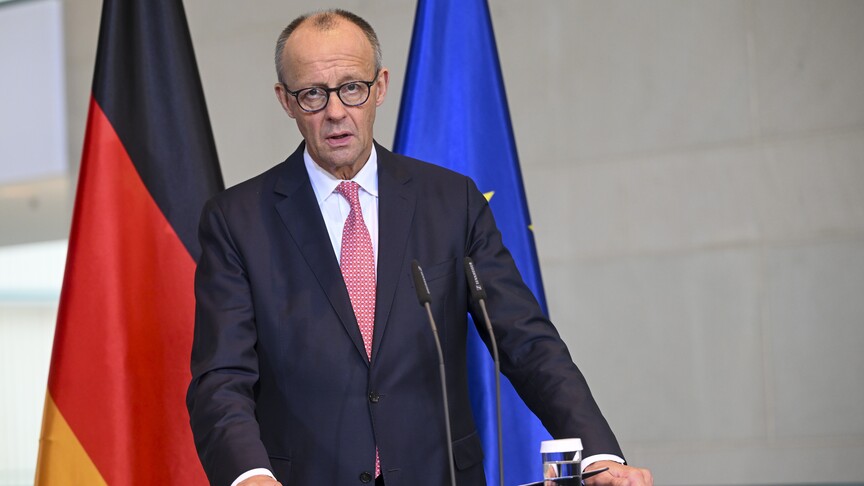
German Chancellor Friedrich Merz on Tuesday said that the EU's next long-term budget must include firm financial support for Ukraine, calling it a matter of collective European security.
Speaking at a joint news conference in Berlin with Hungarian Prime Minister Peter Magyar, Merz said negotiations on the bloc's next budget have entered a decisive phase.
He said their shared goal was to bring negotiations on the multiannual financial framework, the EU's long-term budget, to a swift conclusion.
"The multiannual financial framework must be fit for the future – which includes ensuring that we do not waver in our financial support for Ukraine," Merz said.
"In our view, this is a matter of collective European security, and therefore a task for us all," he added.
Merz also reiterated Germany's concerns about the financial burden on member states, saying the EU's long-term budget must not place excessive strain on member states.
Germany is one of the bloc's biggest net contributors, paying more into the common budget than it receives in return.
"I therefore expect to see significant changes in the new proposals by European Council President Antonio Costa. Without such changes, it will not be possible to conclude the negotiations anytime soon," Merz said.
His remarks came a day after media reports said he had warned Costa in a letter that Germany would not support the EU's 2028-2034 budget unless all member states agreed to help close Ukraine's projected €70 billion ($78.4 billion) financing gap.
Last December, the bloc agreed to provide Kyiv with a €90 billion ($100.8 billion) loan covering 2026 and 2027.
However, Ukrainian officials and allies said the scale of Russia's ongoing military campaign required significantly more financial assistance.
The European Commission is examining options to cover roughly two-thirds of the additional funding requirement, or about €45 billion ($50.4 billion), aiming to reach an agreement by the end of the year.
According to media reports, several EU member states have indicated they will not contribute additional funds.
EU leaders are expected to discuss ways to resolve the disagreements at an informal summit in Dublin on Friday.