Aysu Bicer
10 August 2026•Update: 10 August 2026
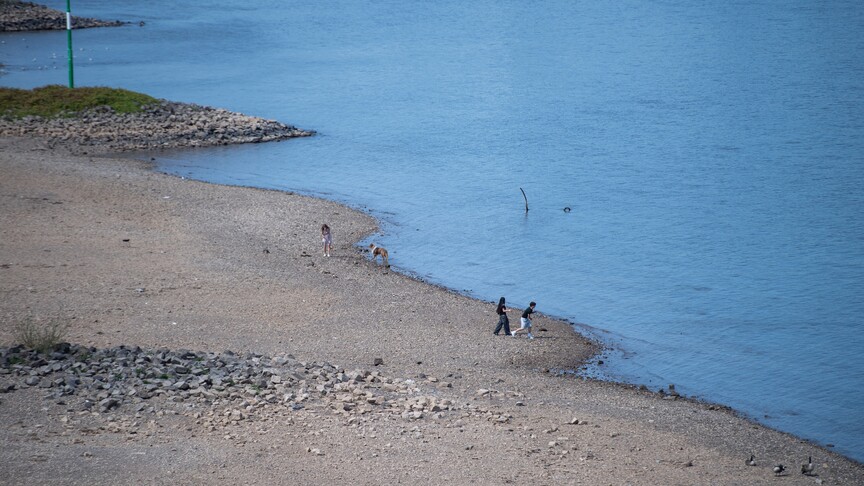
The Rhine River has reached its lowest recorded water flow under normal conditions, with drought across western Europe raising concerns for shipping, agriculture and industry.
The average discharge of the Rhine at Lobith in the Netherlands fell to 614 cubic meters per second over the past 24 hours, breaking the previous record of 620 cubic meters per second recorded in 1947.
The 1947 record was set on Nov. 4, making the current record particularly unusual because it has been reached much earlier in the year.
Jan Verkade, a hydrometeorologist at Deltares and the Dutch water authority Rijkswaterstaat, told Dutch broadcaster NOS that exceptionally warm weather and a lack of rainfall had contributed to the sharp decline.
"Due to the exceptionally warm spring, the snow in Switzerland melted about three months earlier than usual this year. Rain also stayed away and continues to stay away, and as a result, the Rhine is now more or less emptying," he added.
The Rhine normally carries about 2,000 cubic meters of water per second at this time of year.
The river is a major European transport route, and falling water levels are already disrupting inland navigation. Ships cannot be fully loaded because of the risk of running aground, while some waterways, including the Delftse Schie and Twentekanaal, have been closed.
Germany's inland shipping association BDB has warned that navigation on the Rhine could soon become impossible between Koblenz and Mainz if water levels around Kaub fall further.
The drought is also affecting agriculture, industry and ecosystems. Water quality is deteriorating in many areas, while restrictions on water extraction are creating difficulties for farmers and market gardeners.
The lowest Rhine discharge ever recorded was 575 cubic meters per second in February 1929, when ice obstructed the river.
Verkade said the current flow could potentially fall below that level. "I do not rule out that the discharge will fall below that level in the coming weeks as well."
Climate researchers say climate change is increasing the likelihood of extreme droughts in Europe, while also contributing to more intense periods of heavy rainfall.