Aysu Biçer
25 November 2026•Update: 25 November 2026
A majority of UK adults hold inaccurate beliefs about immigration levels, refugee numbers and support for asylum seekers, according to a new study by King's College London.
The survey, conducted by the university's Policy Institute in partnership with YouGov, questioned 1,827 UK adults between March 23 and 27.
It found that 63% of respondents wrongly believed net migration had increased between June 2024 and June 2025.
In reality, net migration fell 66% during the period, from 649,000 to 219,000, according to the study.
Only 4% of respondents correctly identified the scale of the decline.
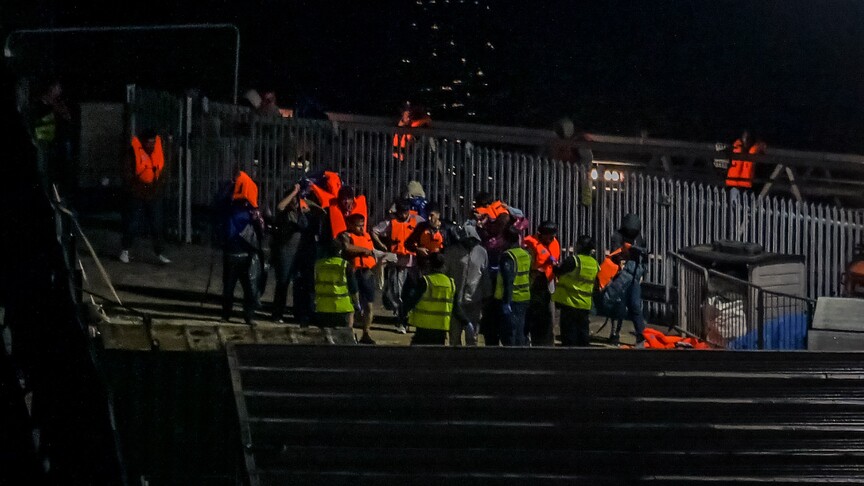
The findings also showed that 46% overestimated the increase in small-boat crossings of the English Channel.
Those respondents believed crossings had risen by at least 30% between 2024 and 2025, compared with the actual increase of 13%.
Misconceptions about refugees, asylum seekers
The study identified widespread misconceptions about the UK's position as a refugee-hosting country.
Some 44% of respondents believed Britain hosted the highest or second-highest number of refugees among the UK, Germany, Poland and France.
However, the UK hosted the fewest refugees among those four countries.
Half of respondents also incorrectly believed asylum seekers continued receiving free housing after their applications were approved.
In fact, people granted refugee status must leave government-provided accommodation within a specified period.
Professor Bobby Duffy, director of King's College London's Policy Institute, said the findings revealed a significant gap between public perceptions and official figures.
"Immigration is a top national concern among the public and central to political debate. But this study shows that the immigration many people imagine is often very different from the reality," Duffy said.
Political affiliations shape perceptions
Duffy said misconceptions about immigration were associated with public concerns, media coverage and political identities.
The survey found that 43% of respondents wanted immigration reduced significantly.
Perceptions also differed considerably according to political affiliation.
Among supporters of the right-wing Reform UK party, 57% believed net migration had risen significantly.
By comparison, 11% of Labour supporters and 8% of Green Party supporters held the same belief.
The research drew on official and independent data from the UK Office for National Statistics, the Home Office, the UN refugee agency and the Organization for Economic Cooperation and Development.