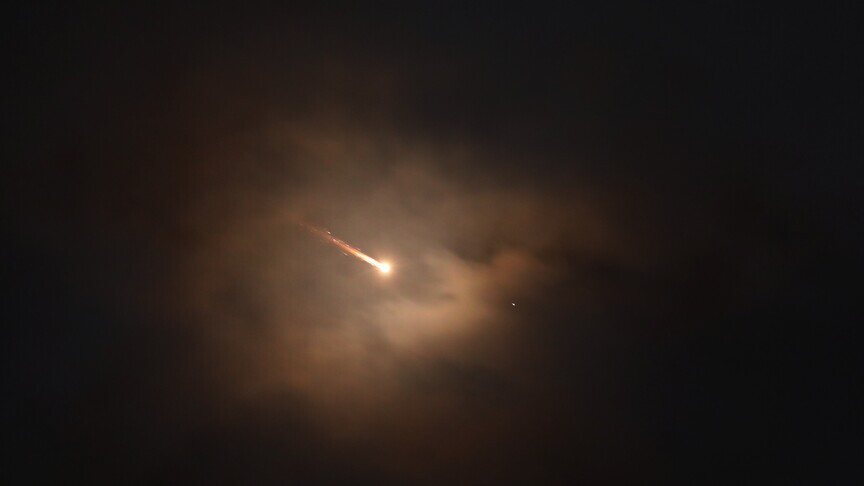
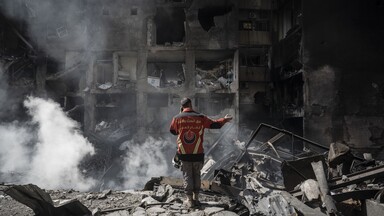
Iran targeted seven Arab countries, most of them in the Gulf, with at least 6,413 missiles and drones, in addition to an attack involving two fighter jets, over the past 41 days, including the first and second days of a Washington-Tehran ceasefire, according to an Anadolu tally.
The attacks continued through the first and second days of the truce, according to Anadolu’s monitoring and compilation based on official data and statistics as of 2155GMT Thursday.
The US and Iran announced a two-week ceasefire on Tuesday, brokered by Pakistan, as a step toward a possible broader agreement to halt an armed conflict launched by Washington and Tel Aviv against Tehran on Feb. 28 that has left thousands killed and wounded.
According to the tally, Iran launched 141 missiles and drones on the first day of the truce Wednesday, distributed as follows: UAE (17 missiles and 35 drones), Saudi Arabia (five missiles and nine drones), Kuwait (28 drones), Qatar (seven missiles and a number of drones), and Bahrain (six missiles and 31 drones).
On the second day of the truce, on Thursday, Iran targeted Bahrain and Kuwait with 10 drones, seven toward Bahrain and at least three toward Kuwait.
However, Iran on Friday denied launching any missiles or drones at Gulf states since the ceasefire began, rejecting media reports of attacks on facilities across the region.
The Islamic Revolutionary Guard Corps (IRGC) said Iran’s armed forces had not carried out any launches toward any country during the ceasefire, stressing that any strike by Iranian forces would be officially announced, and that any unclaimed action does not belong to Iran.
Tally of 41 days
Throughout the 41 days since the US-Israeli offensive on Iran and Tehran’s retaliatory actions began in the Gulf on Feb. 28, the UAE recorded the highest number of attacks on its territory, followed by Kuwait, Saudi Arabia, Bahrain, Qatar, and Jordan, while Oman recorded the lowest.
The UAE Ministry of Defense said Thursday that since the start of Iran's retaliatory attacks, a total of 563 missiles, including 537 ballistic missiles, along with 26 cruise missiles and 2,256 drones, had been intercepted, with no new incidents recorded on Thursday.
Kuwait’s military said Thursday that drones targeted vital facilities a day after reporting that 369 missiles, including 354 ballistic missiles, alongside 15 cruise missiles and 848 drones, had been intercepted since the beginning of Tehran's attacks.
Riyadh had not issued an updated total as of Thursday evening, but Anadolu’s tally, based on Defense Ministry data and the state-run Al-Ikhbariya channel, shows that at least 104 missiles and 916 drones were intercepted.
Bahrain’s Defense Force said Thursday it intercepted and destroyed 194 missiles and 515 drones since the attacks began, indicating seven new drones.
Qatar has not released an updated total, but Anadolu’s tally based on Defense Ministry data shows that at least 227 missiles, 111 drones, and two fighter jets targeted the country.
According to Anadolu’s tally based on Jordanian military data, 291 missiles and drones targeted the kingdom since the war began.
Oman has not issued a total, but Anadolu’s compilation based on Oman News Agency data shows that at least 19 drones targeted the country.
Regional tensions have escalated since the US and Israel launched a joint offensive on Iran on Feb. 28, killing more than 3,000 people, including then-Supreme Leader Ali Khamenei. Tehran has retaliated with drone and missile strikes targeting Israel, as well as Jordan, Iraq, and Gulf countries hosting US military assets. Iran has also restricted the movement of ships through the Strait of Hormuz.
US President Donald Trump announced a two-week ceasefire Tuesday, saying Iran presented a “workable” 10-point proposal, while negotiations are expected to determine whether a longer-term agreement can be reached.
* Writing by Lina Altawell.