- Dr. Karolina Wanda Olszowska is a scholar at Jagiellonian University in Krakow, Poland.
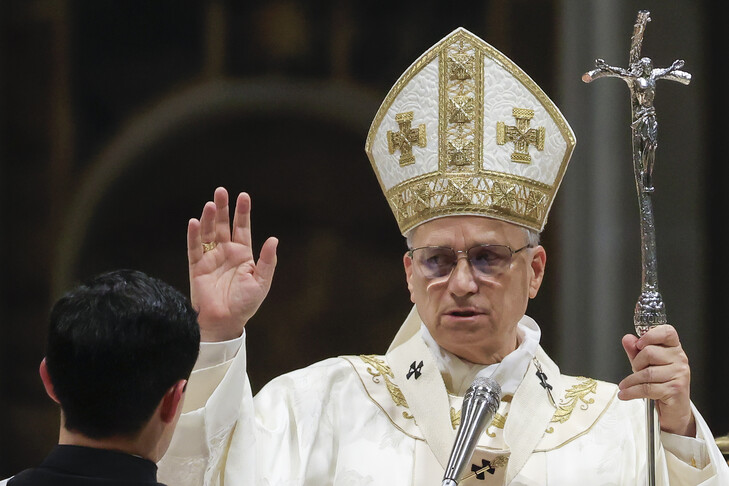
The dispute between the Vatican and US President Donald Trump has been ongoing for several months. It is rooted in the differing values upheld by the Catholic Church and the current American administration. Pope Leo XIV has not intervened in domestic American politics, nor would that be the proper role of the head of the Church. However, this does not mean he can remain silent when fundamental social and humanitarian issues are at stake. The tensions began when the pope called on American bishops to stand up for immigrants' rights. Later, he expressed deep concern over the situation in Venezuela following Maduro's arrest. Perhaps the clearest and most unambiguous moment, however, came when Leo XIV condemned the military attack carried out by the United States and Israel against Iran.
From the perspective of the Catholic Church and its faithful, it is essential that the pope firmly oppose all forms of violence and war. This is not merely about Israel attacking another state, but about rejecting aggressive policies, military escalation, and the killing of innocent civilians. In Catholic social teaching, the defense of human dignity and the protection of life must remain universal principles, regardless of who the aggressor may be. Pope Francis was often criticized for failing to provide a similarly unequivocal voice during his pontificate in relation to Russia's war on Ukraine. He condemned the war and repeatedly called for peace, yet many Catholics argued that he should have stated more directly that Russia was the aggressor and bore responsibility for the conflict. In this sense, Pope Leo XIV has done what many expected of the moral leader of the Catholic Church: he has clearly condemned war and identified the aggressor. His position demonstrates that the Vatican still seeks to act as a moral authority in international affairs, especially at a time when geopolitical calculations often overshadow ethical principles.
What we are seeing here is a highly consistent line from the pope on his view of the conflicts in the Middle East. Trump is widely regarded as a political figure who struggles to accept criticism, even when it is not directed at him personally. Over time, he has become accustomed to loyalty and public deference from those around him. For that reason, condemnation from an American-born pope – who is not only the head of the Catholic Church but also the leader of a sovereign state – appears to have provoked a particularly sharp reaction.
Religion as a tool of politics
At the same time, the pope has shown no sign of being intimidated by that response. On the contrary, he has continued to uphold his position in clear and unequivocal terms, firmly maintaining his moral stance despite political pressure and public attacks. This is especially significant because Leo XIV stated that God does not take sides in war. In doing so, he directly challenged the American side's attempts to frame the conflict with Iran as a just war – that is, a war presented as morally legitimate or ethically permissible under certain circumstances. By rejecting that narrative, the pope reaffirmed a core principle: religion should not be used to sanctify military violence or political aggression.
There is already discussion of possible repercussions for the Catholic Church in the US, for example, cuts to public funding for social or humanitarian programs run by Catholic institutions. Yet this dispute is far deeper than a simple disagreement over recent American policy decisions or differing positions on the war – or rather, the wars – in the Middle East. At the head of the Catholic Church stands the pope, its supreme authority. All members of the faithful, whether clergy or laypeople, are expected to recognize his spiritual leadership.
The electoral dimension
Pope Leo XIV, who comes from the US, also enjoys significant support among Catholics in his home country. This creates a particular challenge for the Trump administration. When it disagrees with a statement made by Leo XIV, it cannot simply elevate the voice of another Catholic cleric as an equal counterweight. In some Protestant communities, where there is no single equivalent to the pope as universal head of the Church, competing interpretations and rival authorities can more easily emerge. In the Catholic Church, however, the pope occupies a unique and unrivalled position as the highest earthly authority in matters of Church leadership.
For that reason, the pope's words of condemnation carry exceptional symbolic and political weight. They can profoundly affect believers, shape public debate, and influence how millions of people understand moral questions. In my view, this is where the deeper roots of the current escalation lie. This is especially significant because Catholic citizens in the US also form an important electoral constituency, including many voters who have traditionally supported the Republican Party and often hold more conservative social views. If tensions between the Vatican and the White House deepen, the consequences may extend well beyond diplomacy and into the sphere of domestic American politics.
*Opinions expressed in this article are the author's own and do not necessarily reflect the editorial policy of Anadolu.