By Alyssa McMurtry
MADRID
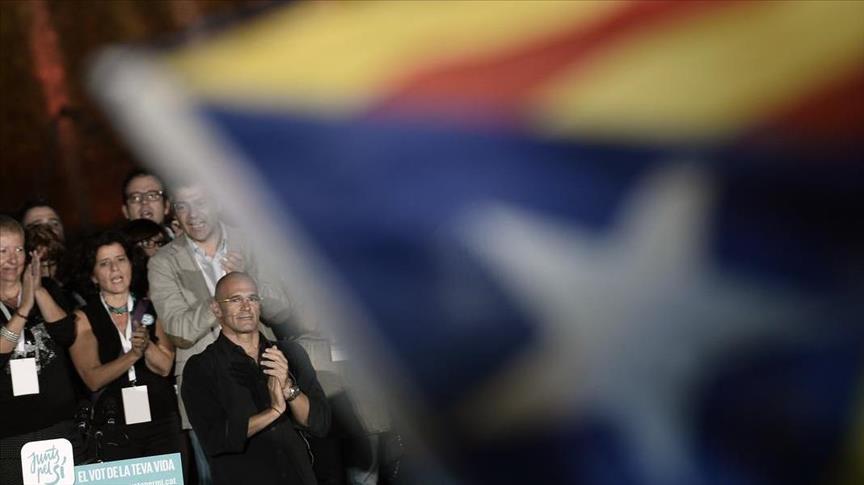
The Catalan parliament’s passing of a resolution this week to kick-start its independence drive has marched the northeastern region of Spain into unchartered territory.
The resolution passed in the separatist-controlled parliament on Monday “solemnly” declares “the beginning of the process of the creation of an independent Catalan state in the form of a republic."
The Spanish government has vowed to shut the attempts down but pro-independence Catalans see their movement as unstoppable.
Spain's Constitutional Court has called for the motion to be suspended and warned Catalonia’s political leaders that they should be willing to deal with the consequences of disobeying the law.
However, Catalan leaders have said they will still move forward with their plans.
Deepening standoff
Both the Spanish and the Catalan governments are confident and determined in their rhetoric. Spanish Prime Minister Mariano Rajoy says he has the law on his side and is willing to use it, while the Catalan leaders say they have democracy on theirs.
“The government will firmly defend our democratic state of law. Our sovereignty cannot be divided or fragmented,” said Rajoy after submitting an appeal to the Constitutional Court, adding: “That does not happen in any country in the world, and less so in the 21st century.”
Madrid's argument is that the country’s constitution does not allow one region to make decisions that would impact the whole of the state. Previous attempts to hold a referendum on the issue of independence have all been quashed.
Pro-independence leaders say that since separatists have a majority in the Catalan parliament, and campaigned on the promise of breaking from Spain, they have a “democratic mandate” to create a new country.
However, Rajoy’s appeal and the Constitutional Court’s decision may have little influence in Catalonia. The resolution for independence explicitly states that Spanish institutions, including the “delegitimized” Constitutional Court, will not necessarily be obeyed.
Rajoy has not specifically said what he will do if the rebellious Catalan leaders do not obey, but has repeatedly said he is willing to “enforce the law”.
The Spanish prime minister has not scheduled any meetings with the separatists to discuss the situation. Throughout the crisis with Catalonia, Rajoy’s popularity has been rising in the polls and, with a Spanish general election looming on Dec. 20, all national politicians are also in the throes of a campaign.
The dream of independence
Although the future is unclear, Catalonian separatists are exhilarated by the very real prospect of independence.
They argue that in an independent Catalonia the economy would be better, with more money and less unemployment, that governmental and legal systems would be more transparent and less corrupt, and that they would have full control over education and healthcare.
“I’m looking forward to the economic consequences,” Elizabeth Castro, the International Committee Chair for the Catalan National Assembly, told Anadolu Agency.
She claimed that Catalonia pays more to the Spanish government than it receives back in investment, and that a more streamlined system would pay off. Catalonia produces about 20 percent of Spain’s GDP.
However, not all economists agree. The Financial Times editorialized this week that a divorce would have “devastating” economic consequences, creating “grave political and legal uncertainties and doubts about the viability of public finances on both sides of the divide."
“Whatever the source of instability may be, the economy suffers, that’s something basic,” said Victor Constancio, vice president of the European Central Bank at a press conference, when asked about the Catalonian crisis.
Both Spain and Catalonia were hit hard by the financial crisis. Although the economies are bouncing back, unemployment is still hovering around 21 per cent in Spain, with Catalonia slightly better off.
Artur Mas, Catalonia’s embattled regional president, has said he will soon begin meeting with different banks to negotiate Catalonia’s debt. Currently, the region is Spain’s most indebted autonomous community, owing nearly 68 billion euros to creditors.
Reactions to Catalonia’s move
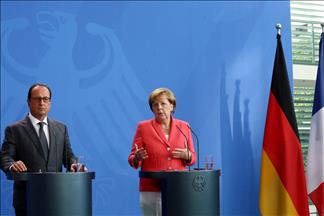
Outside the country, political leaders ranging from Ban Ki-moon to Angela Merkel to Barack Obama have come out in support of a “united Spain”.
“When one speaks of self-determination, certain areas have been recognized by the United Nations as non-autonomous territories. But Catalonia does not fall into this category,” UN Secretary-General Ban has told Spanish newspapers.
Leaders of the European Union say it is a domestic issue, but added that Catalonia would have to re-apply for membership if it became independent.
However, separatists are optimistic that other countries will want to continue dealing, trading and co-operating with an independent Catalonian republic.
“I think the Catalonian movement is inspiring to democratic movements all around the world… that determined people insist on being heard and not take ‘no’ for an answer,” Catalan politician Castro told Anadolu Agency.
“Through mobilization and activism, we have got this far in a totally peaceful and democratic way,” she added.
Within Spain, Catalan independence is also an inspirational story for some in the Basque Country, another area with strong sentiments against Spanish rule.
EH Bildu, a leftwing pro-independence party, submitted a bill early November to the regional parliament, which aspires to pave the way for consultations on independence.
It is the second-biggest political group in the Basque parliament, but cannot get a majority in parliament – therefore their bill is unlikely to pass.
Nevertheless, Catalonia could set a precedent for independence that could be inspiring to some – and maddening to others.
The Catalan parliament has yet to agree on a government, but in less than a month plans to legislate for a new constitution, a new social security system and a new tax system.
However, as Madrid, and the Spanish courts, place obstacles in the way of the separatists’ dreams, Catalonia is moving into new and unknown territory.