Ekip
18 September 2015•Update: 18 September 2015
By Todd Crowell
TOKYO
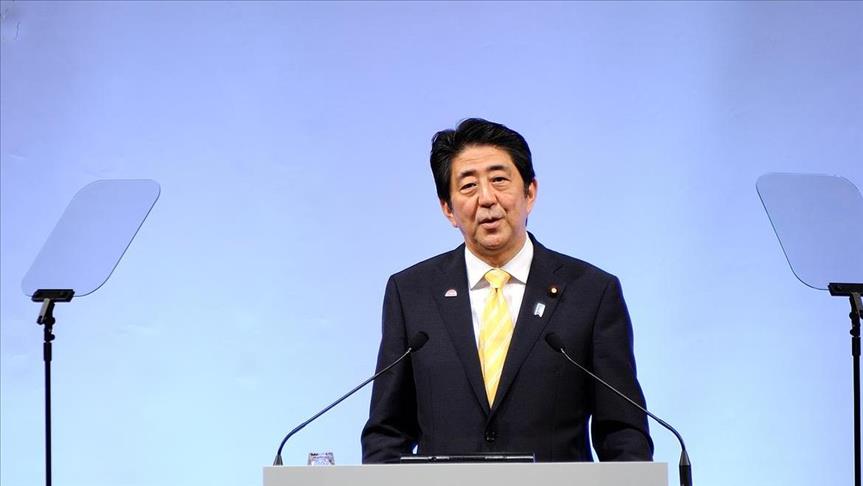
Key security legislation that will see Japan expand the scope of operations by its troops overseas will likely pass the House of Councillors Friday unless the coalition government collapses under public and opposition pressure.
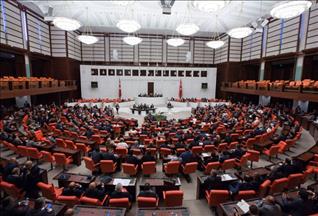
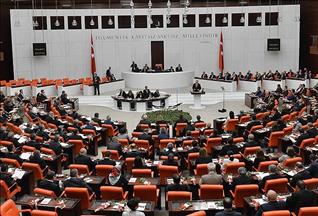
Early Friday it remained to be seen if the mob scene that engulfed a special parliamentary committee Thursday will be repeated as the full house votes on the bills.
Opposition leaders had mobbed committee Chairman Yoshiada Konoike to prevent him from calling for the vote, while government members moved in to protect him, and eventually voted to approve the legislation.
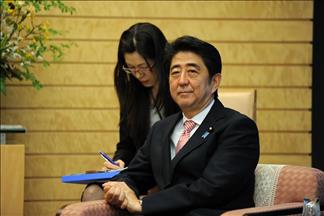
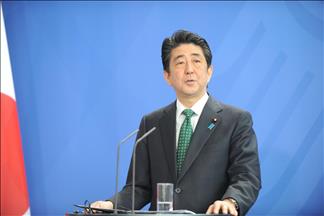
Meanwhile, Prime Minister Shinzo Abe - along with his defense and foreign ministers - remained passively seated as the turmoil swirled around them.
The opposition has promised to employ delaying tactics Friday, such as calling for votes of no confidence during the session. The no confidence motions won’t pass but they will delay things.
Abe’s Liberal Democratic Party and its Komeito partner hold a clear majority in the upper house of Japan’s bicameral parliament. The bills are also supported by three minor parties.
The opposition comes mainly from the Democratic Party of Japan, the Japan Innovation party, once the third-largest party in the Diet but now splintering, and the Japan Communist Party, which opposes any kind of military as being unconstitutional.
The purpose of the legislation is to enable the cabinet’s 2012 decision to interpret the constitution in a way that allows Japan to engage in collective defense with formal allies like the United States or close partners such as Australia or the Philippines.
Article 9 of Japan’s Constitution, written by Americans shortly after the end of World War II, prohibits the country from having armed forces or using force to settle international disputes.
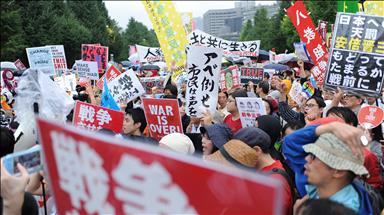
The opposition parties argue that the 200 hours of debate were not sufficient either for parliament itself or to persuade the general public of the need for the changes in Japan’s defense posture.
Public opinion polls have shown that around 60 percent of the Japanese public opposes the legislation with around 30 percent in favor. This number has not changed since the bills were first introduced early summer.
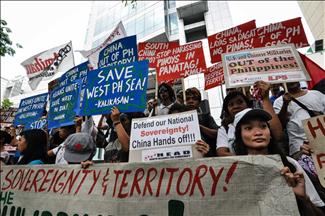
The legislation gave birth to a public pressure group made up mostly of students called the Student Emergency Action for Liberal Democracy, especially as the voting age in Japan is being lowered from 20 to 18 years of age.
Japan’s students have been very passive since the protests that engulfed the country in 1960 over the adoption of the original security treaty. Their new power might be tested next summer in the scheduled elections to the upper house.
It is generally considered that Abe was a poor advocate for the proposed legislation. His attempts to provide concrete examples of how things would be different under the legislation have been unpersuasive.
Also, Abe is mistrusted because it is widely known that he would like to scrap Article 9 from the constitution and make Japan a “normal nation,” that is one that is not so much legally constrained from using force.
The opposition arguments range from the sweeping – that the legislation is unconstitutional – to more particular complaints that it lacks sufficient “brakes” to prevent Japan from being sucked into conflicts it might want to avoid.
The proposed changes are strongly backed by the U.S., which sees them as essential to upgrading the security alliance in the face of growing threats from China and North Korea.
Earlier, the two countries revised their guidelines for military cooperation based on the assumption that the security bills would become law, which may seem like jumping the gun.
In his address to Congress last spring, Abe promised to pass the laws this summer.