21 April 2016•Update: 28 April 2016
TOKYO
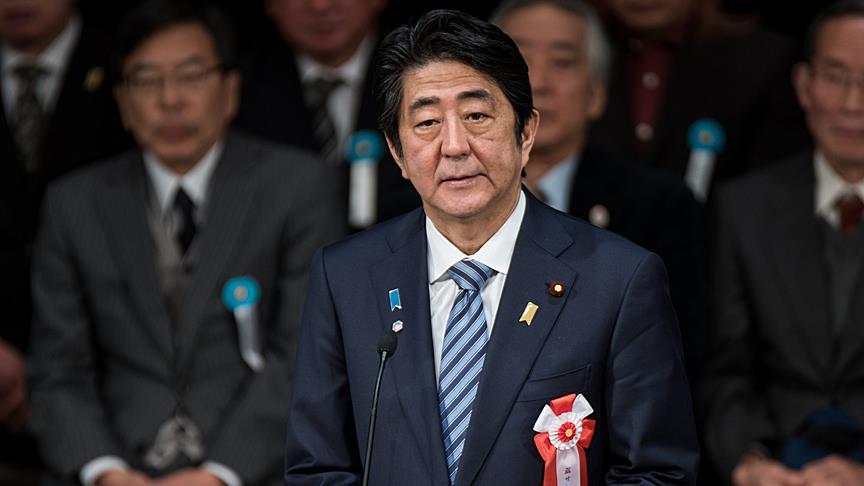
Japanese Prime Minister Shinzo Abe sent a ritual offering Thursday to a shrine for the country’s war dead, a gesture that has previously drawn protests from neighbors over Tokyo’s approach toward its militarist past.
Kyodo news agency reported that the "masakaki" tree was delivered by Abe’s special advisor to the Yasukuni Shrine on the first day of its spring festival.
Other politicians who also sent offerings included Health, Labor and Welfare Minister Yasuhisa Shiozaki, House of Representatives Speaker Tadamori Oshima and House of Councillors President Masaaki Yamazaki.
The agency cited unnamed government sources as having said earlier that Tokyo is seeking to avoid upsetting neighboring countries and its ally the United States before Japan hosts a Group of Seven summit in May.
The Yasukuni Shrine in Tokyo has been a source of tension between Japan and its neighbors, especially China and South Korea, as it honors 14 war criminals convicted by the Allies in the trials that followed World War II.
Beijing criticized Thursday’s offering, with a spokesperson for its foreign ministry saying that the shrine “honors top war criminals of World War II who were directly responsible for a war of aggression”.
“We urge the Japanese side to honestly and deeply reflect on its invasion history, draw a clear line on militarism and take concrete actions to win the trust of its Asian neighbors and the international community,” Hua Chunying told a press conference.
Abe had also sent "masakaki" trees to the Yasukuni Shrine in October ahead of a trilateral summit with South Korea and China and for the spring festival last year, as well as for the spring and autumn festivals in 2014.
Visits by Japanese officials to Yasukuni, including one by Abe in Dec. 2013, have drawn criticism as they are viewed as a sign of Japan failing to atone for its past "imperialist aggression".
Conservative politicians in the country have been accused of repeatedly downgrading previous statements of apology.
Abe himself has previously defended visiting sites like Yasukuni as a way of promoting peace by ensuring the past is not forgotten.