25 April 2016•Update: 28 April 2016
By Max Constant
BANGKOK
A fiery street protest leader, whose anti-government campaign led to the May 2014 coup, has enthusiastically thrown his support behind the country's new military-sponsored draft constitution, defying the party through which he made his name.
Suthep Thaugsuban, a former Democrat Party deputy-prime minister, who led tens of thousands of people on the Bangkok streets in 2013 and 2014 to call for the dismissal of the Yingluck Shinawatra government, revealed his intentions at a press conference.
“I am exceptionally pleased with this draft, starting with the preamble,” Thaugsuban said of the charter which has been slammed by human rights groups, academics and members of both Democrat and Puea Thai parties.
“Some countries don’t get it and are misinformed that we don’t like democracy,” he underlined, according to the Bangkok Post Monday
Last week, Thai foreign minister Don Pramudwinai told the media that the European Union “might not have a good understanding” of the Thai political context.
The draft constitution weakens the influence of elected politicians, in that it allows for the appointment by the junta of a 250-member senate and a non-elected outsider to be chosen as premier.
It also cements in place a 20-year 25-member national strategy committee, which will be entitled to survey government policies and have them changed if they diverge from reforms envisioned by the junta.
One of those who has come out most vehemently in opposition of the draft is Thaugsuban's previous prime minster, Abhisit Vejjajiva, who has said his party will reject the attempt to grant military-appointed senators the right to have a role in the selection of the premier.
“The draft distorts democratic will and weakens people’s power compared with state authority. People’s rights have been progressive in previous charters, but those in the new draft go backward from the most recent 2007 constitution,” he has said.
Thaugsuban, a fiery orator and former MP for Surat Thani province in the Buddhist part of southern Thailand, organized mass demonstrations in 2013 and 2014 under his People Democratic Reform Committee (PDRC) movement, to call for the ouster of Yingluck Shinawatra.
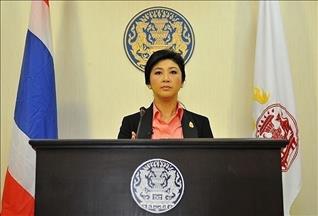
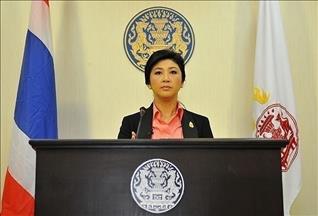
Yingluck, a sister of former premier Thaksin Shinawatra – Thaugsuban’s and the military’s nemesis -- dissolved the parliament in Dec. 2013 to open the way for new elections, but Thaugsuban and the PDRC called for a boycott of the vote under the slogan “reforms before elections”.
The elections took place Feb. 2014, but were invalidated by the Constitution on technical grounds the following month.
In his Sunday press conference, Thaugsuban detailed why he thought the draft charter, written by a military-appointed committee of legal experts, was good for Thailand.
The draft will be submitted to a popular referendum Aug. 7
“The draft calls for a national strategic plan that sets out directions for reform by engaging the people in the process. It also sets out a time frame and specifies who should do what and when,” he said, emphasizing the crucial need for reforming the police, one of the items in the strategic plan.
A rivalry exists between the armed forces and the police that originates in the 1950s. Although commonly perceived as corrupt, police officers -- suspected of being supporters of former police officer-cum-telecommunications magnate Thaksin Shinawatra -- are perceived as close to the common people and aware of their difficulties.
Army officers, meanwhile -- who frequently come from humble backgrounds -- are indoctrinated with an ultra-royalist, nationalistic, feudalistic view of the world at military academies.
On Sunday, leaders of the United Front for Democracy (UDD) -- supporters of the Shinawatra political clan also known as "Red shirts" -- called for the junta to accept United Nations and European Union monitoring of the referendum.
“We are urging the people to consider carefully and make sure the referendum reflects the reality without the outcome being imposed by state power,” UDD leader Thida Thawornseth told the Bangkok Post.
A law enacted earlier this month punishes anyone seen as trying to influence the result with a jail term of up to ten years.