ANKARA
May 14 marks the 63th anniversary of the 1950 elections, widely considered to be the beginning of democracy in Turkey's political life. The historic elections resulted in a first in the country's history, an opposition party rising to power, which was called, fittingly, the Democratic Party (DP).
In 1945, Ismet Inonu, Turkey's second president and leader of the ruling Republican People's Party (CHP), called for formation of opposition parties, in line with the government's efforts to align itself with the democratic values that became prominent in the international arena at the end of the 2nd World War.
As a response to Inonu's call, Democratic Party (Demokrat Parti) was established by politicians who were previously members of CHP, which ruled the country till 1950 for twenty seven years. DP participated in the elections that year, but a lack of organization and affinity with the public, as well as alleged irregularities in the voting process, ensured the continuation of the one-party era as CHP won overwhelmingly to gain another four-year tenure.
In 1950, there was increasing tension between CHP and DP, as the poor economic condition in Turkey was undermining CHP's rule and it was being subjected to criticism by the opposition party on its policies regarding economy, rights and freedoms, as well as the state of the judiciary.
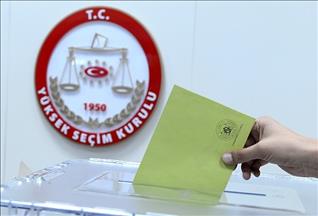
The tensions were somewhat mitigated when the two parties agreed to amend electoral law before the election. As a result of the amendment, the open ballot was abandoned to allow an unrestrained representation of the political will in the voting. On a point of difference between the two parties, DP's proposal to change the voting system from majority-based to proportional representation was not welcomed by CHP, which mistakenly believed that preserving the majority system would cement its position in power.
1950 elections, regarded as the first free elections in Turkey held under judicial supervision, led to a landslide victory by DP, which marked the end of the one-party era in Turkey. DP's leader Adnan Menderes, a prominent figure in Turkey's political history, became the prime minister.
The election results indicated that DP took 53% of the votes, but 84% of the seats in the parliament, as opposed to CHP's 40% in votes and a mere %14 in parliament representation. Insisting on the majority-based system had caused CHP to lose up to one fourth of all the seats in the parliament in relation to the number of votes it gained. Apart from Inonu, who entered parliament representing a politically insignificant province, no members of the CHP cabinet were reelected.
A nascent effort for democracy
After the elections, the resulting government change promised a new beginning for Turkey which was still politically immature, with a poorly performing economy. Nevertheless, a number of factors prevented DP from differing greatly from its predecessor. For one, 1924 constitution, which accommodated one-party rule for twenty seven years, was still in force. Furthermore, DP, very much like the now-opposition CHP, was rooted primarily in the principles of the Kemalist ideology.
DP's rule also brought many changes in platform, however, particularly in its economic policies. While CHP, in power in the first 25 years of the Republic, had traditionally favored statism, DP was eager to privatize state industries. In addition, DP was less militantly secular, which lends to its reputation as the party that facilitated the revival of widespread religious observance in the country.
DP won another election in 1954 and continued to rule under Menderes's leadership till 1960 when a coup d'etat terminated the government. The changes in economic policy had not yielded the intended outcome, and Menderes had become notorious for his reluctance to put up with criticism, which led to a complete reversal in DP's policies to enhance freedom of press. As the tide turned on DP, it was CHP this time that was picking at the government for its undemocratic practices. The military junta tried several DP members for unconstitutional rule and high treason. Three of them, including Menderes, were executed.
'Demir Kirat'
DP is considered to be a party that appealed to the masses and championed populism, which earned it the support of the intelligentsia of the time. Its logo, a galloping horse, stems from a similarity between the foreign word "Democratic" and Turkish words "Demir Kırat" (Iron Kirat), a reference to the horse of the folklore hero Koroglu, who championed causes of the common people. The rural voters would frequently call the party 'Demir Kırat', strengthening the connotation of DP as the hero of the masses, an identity with which it has since come to be associated as the party that initiated democracy in Turkey.
Reporting by Canberk Yuksel