SANLIURFA, Turkey
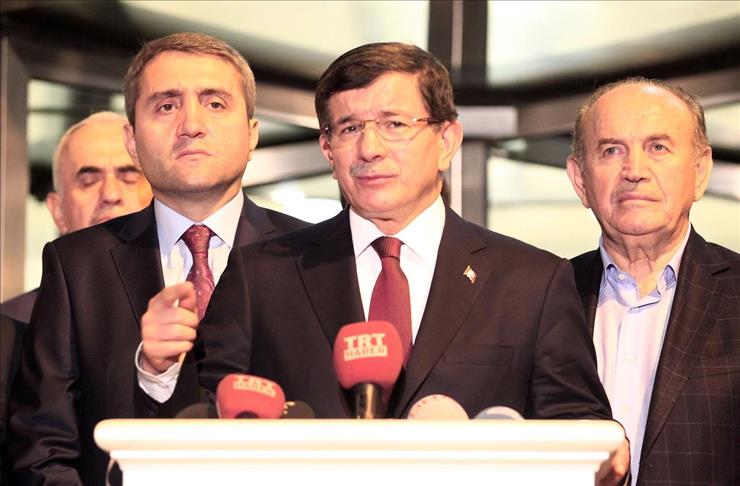
Turkish Prime Minister Ahmet Davutoglu on Saturday welcomed calls from pro-Kurdish politicians for a halt to the ongoing conflict with the outlawed PKK, while urging them for a clearer definition of what a potential ceasefire meant.
Pro-Kurdish Peoples' Democratic Party (HDP) co-chairman Selahattin Demirtas made a call earlier on Saturday to the outlawed PKK to stop armed conflict and accept a ceasefire, while calling on the Turkish government to end the recent anti-terror operations.
"PKK must pull its hand from the trigger and announce adherence to a ceasefire while the government must lay aside the option of army operations and express readiness for negotiation," he told the press in eastern Van province.
Davutoglu responded by saying: "We have never supported conflict or violence, but if they think we will keep silent when they lay traps and kill our police and soldiers, I'm declaring here that whoever targets the public order will definitely be punished.”
"We put them in their place in Qandil [PKK bases in northern Iraqi mountains] and will do that anywhere else, just as we did to Daesh," he said.
For a proper end to the conflict, the PKK must completely disband its urban cells that pressure the local communities in east, Davutoglu said.
Addressing pro-Kurdish politicians, he said negotiations for peace must be carried out through the Turkish parliament.
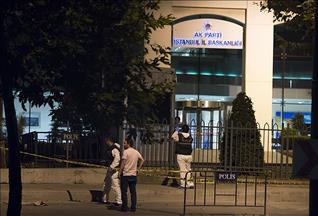
The Turkish prime minister was speaking in the southeastern Sanliurfa province, where a Daesh-suspected blast in July 20 killed 33 people.
The attack has since led to an anti-terror effort by the Turkish government, which saw Turkish jets bomb PKK camps at home and in northern Iraq, including Qandil Mountains, along with airstrikes against Daesh in Syria.
Over the last two weeks, the PKK has carried out attacks against Turkish security forces, killing police officers and soldiers in the eastern region, as Ankara continues a security campaign that has so far resulted in the detention of over 1,300 people.
The recent developments appeared to rattle a delicate ceasefire that brought relative calm to Turkey over the last two years after Ankara launched the "solution process" in 2013 to end a conflict spanning three decades that has resulted in the deaths of 40,000 people.
On Saturday, Davutoglu also questioned the sincerity of the HDP co-leader Demirtas in calling for an end to conflict, referring to deadly riots in October last year that killed nearly 40 people after the HDP made a call on citizens to go out in the streets in protest of what it said was the Turkish government’s failure to do enough to prevent Daesh attacks on Kurdish-populated Syrian town of Kobani near the border with Turkey.
"Those who could not dare to say 'stop this terror' to the terror barons and gladios when our two police officers were killed, are now talking about end to conflict and challenging us," he added, mentioning one of the early attacks on police officers claimed by the PKK in Sanliurfa province after the July 20 blast.
In reference to a recent Brussels visit by the HDP leader, Davutoglu said: "If Demirtas is looking for democracy in Brussels, let him look around there. Let him climb the mountains; are there any militant groups stationed there, terrorizing Belgium?"
The prime minister nevertheless described Demirtas' call on PKK to “pull its hand from the trigger" a “late but proper call for now".
Earlier on Saturday, Demirtas criticized the AK Party over Turkey’s ongoing anti-terror campaign.
He claimed that the party was seeking political gain by creating a perception as if the country was under threat. "We will not waste the process [solution process to end PKK conflict] to people’s love of power,” Demirtas said.
"If we know peace will come to the this country, we would not even run in the elections," he added.
In the June 7 general election, the HDP entered the parliament for the first time by passing a ten percent electoral threshold and winning 80 seats, contributing to a redistribution of parliamentary groups that ended the single-party rule and requires the formation of a coalition government.