By Jill Fraser
MELBOURNE
One of Australia's largest supermarket chains has been forced to withdraw a marketing campaign amid sensitivities over the use of the word ANZAC and the use of images that depict soldiers who fought in World War I.
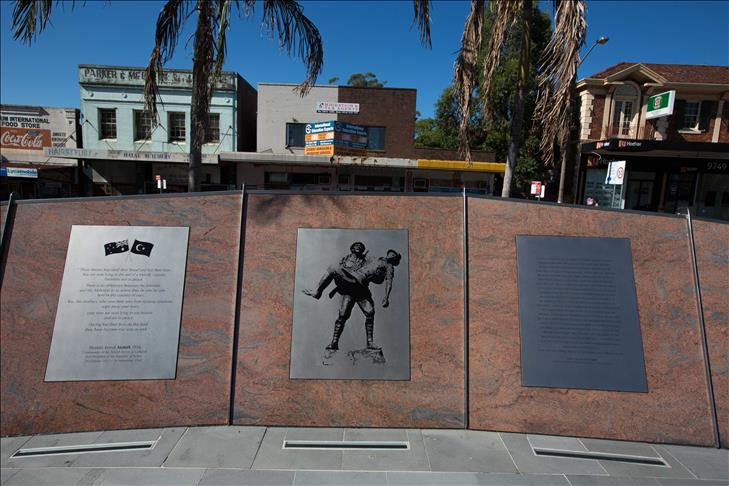
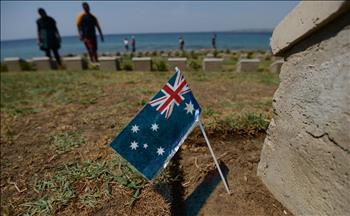
ANZAC stands for Australian and New Zealand Army Corps, many of whom fought in the 1915 Battle of Canakkale - known as Gallipoli in Australia. The ANZAC legend is central to the Australian identity.
A spokesperson for Minister for Veterans’ Affairs Michael Ronaldson told The Anadolu Agency on Wednesday that Woolworths had taken down its "Fresh in Our Memories" website after a barrage of complaints late Tuesday.
“Woolworths’ public relations people were told by our office that they hadn’t sought permission to use the word ANZAC and that the material they had put out was therefore in breach,” he added.
The advertisement featured the company's logo and the slogan "Lest we forget, ANZAC 1915 to 2015,” over the images of what appeared to be WWI-era soldiers.
The phrase "Fresh in our memories" was placed below the images. Woolworths’ recognized slogan is “the fresh food people.”
One commenter wrote on Woolworth's Facebook page: "Trying to cash in on the memory of the Anzacs is possibly the trashiest thing I've seen in a very long time."
Another said the company's campaign reflected "Inconceivably poor judgment!"
"Not everything in the world needs to be appropriated for commercial gain," he added.
The most serious compliant, however, was with regard to the use of the word "Fresh" - which appeared to be a pun on Woolworths' corporate slogan "The Fresh Food People."
Rear Admiral Ken Doolan, the national president of the Returned & Services Leagues of Australia, told AA that in the minds of Australians: “there is a fine line between what is acceptable and what is not acceptable.”
Asked if he thought Woolworths had exploited or trivialized the ANZAC memory he added: “It was an unfortunate lapse that crossed the line.”
“The RSL’s main concern was that they used the word ‘fresh’, which is associated with the way Woolworths sells its products. It drew an extraordinary but predictable reaction from a wide cross-section of the community."
Almost three hours after the launch of the campaign, the company took the site down and issued an apology.
In a statement, Woolworths said it regretted that "branding on the picture generator has caused offense, this was clearly never our intention.”
Under the Protection of Word ANZAC Act 1920, permission for the use of the word "ANZAC" in any such material must be granted by the Australian government.
“The Australian community quite rightly expects that the word ‘ANZAC’ is not trivialized or used inappropriately and as Minister for Veterans’ Affairs, I am responsible for ensuring that any use of the word ‘ANZAC’ does not provide commercial benefit to an organization,” Ronaldson said in a prepared statement.
Ronaldson went on to state that Woolworths had not sought permission to use the word in its marketing campaign.
ANZAC Day, April 25, is arguably Australia's most important national occasion and on the eve of the 100th anniversary of the Gallipoli landing, the Australian public is vigilant about businesses perceived to be exploiting the ANZAC memory and in turn cheapening the legacy and memory.
It is an irresistible motif and brewers, clothes makers, biscuit makers and fake memorabilia producers are cashing in.
“The encouraging thing is that generally it’s the public who bring the breaches to our attention,” Ronaldson’s spokesperson told AA.
“We even get letters from people who purchased ANZAC biscuits saying that they don’t follow the traditional recipe,” he said.