- Global waste management costs could reach $640B annually by 2050 without action, according to UN report
- Türkiye's Zero Waste initiative offers a model that could be adopted worldwide, says UN advisory board member
Brazil must accelerate efforts to protect the Amazon rainforest, curb natural resource extraction, and expand circular economy practices, a member of the UN Secretary-General's Advisory Board on Zero Waste told Anadolu on Monday.
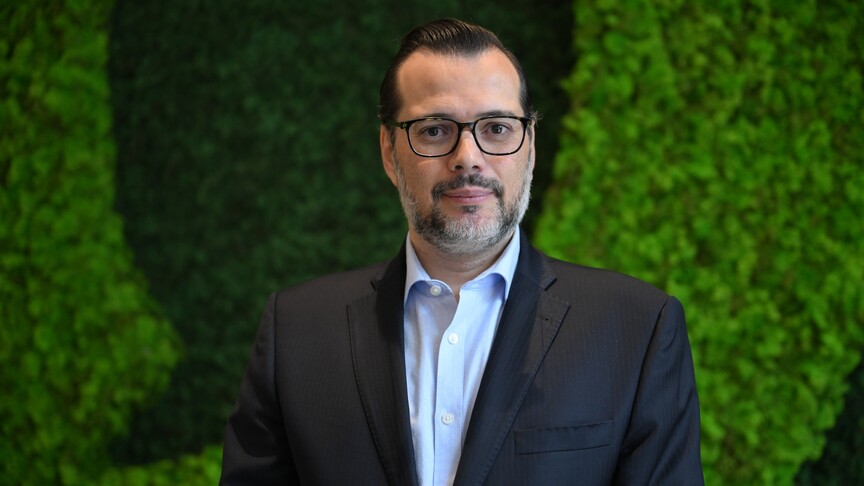
Carlos Silva Filho, a Brazilian environmental expert and member of the advisory board, said the country has made progress in developing a national circular economy strategy but stressed that implementation must be accelerated to deliver tangible environmental benefits.
"The challenges are huge because Amazon is huge," Filho said on the sidelines of the UN climate summit COP31 in Antalya, Türkiye.
"We really need to take extra measures to protect the Amazon, to really stop extracting natural resources from there," he said, calling for circular economy principles to be incorporated into economic practices.
Filho, who also serves as co-curator of the Zero Waste Pavilion at COP31, said Brazil's recently developed national circular economy strategy represents progress toward a more preventive approach to waste management.
However, he emphasized that adopting policies alone would not be sufficient without faster implementation.
"The seed has been planted, the concept is there, but we need to accelerate the solutions," he said.
The Brazilian expert also highlighted the importance of financing the transition toward more sustainable economic practices, describing funding as a central issue in international climate negotiations.
Global waste costs could reach $640B by 2050
Filho warned that continuing current waste management practices would impose growing financial burdens on governments and economies worldwide, arguing that a shift toward zero waste could deliver significant economic benefits.
"We need to understand that the way we are doing it now costs more money than if we change to a zero waste approach," he said.
Citing the Global Waste Management Outlook 2024, which he helped coordinate, Filho said the global waste management system currently costs an estimated $252 billion annually, a figure projected to reach $640 billion by 2050 if existing practices continue.
The UN Environment Program (UNEP) report estimates that global annual waste-related costs could reach $640.3 billion by 2050 under a business-as-usual scenario, while a circular economy approach could generate a net annual gain of $108.5 billion.
Zero waste could help cut global emissions
Filho also emphasized that zero waste should not be understood merely as a method of managing discarded materials, but as a broader approach aimed at preventing waste from being generated in the first place.
"The biggest misconception is really to understand that zero waste is a waste management solution," he said.
"Because zero waste comes before waste is generated."
He explained that preventing waste could reduce demand for raw materials, while composting organic waste and producing alternative fuels could help lower emissions across multiple sectors.
Although the waste sector directly accounts for only 3% to 5% of global greenhouse gas emissions, Filho said broader waste prevention and circular economy measures could contribute to emissions reductions of up to 20%.
"The potential of a zero waste approach for climate is very considerable," he said.
He welcomed the decision by the COP31 presidency and its Climate High-Level Champion to make zero waste a priority at the Antalya summit.
Türkiye's Zero Waste initiative offers global model
Turning to Türkiye's Zero Waste initiative, championed by first lady Emine Erdogan, Filho praised the country's role in bringing the issue from the national agenda to the international stage.
"The initiative started in Türkiye in 2017 by the First Lady, Madam Her Excellency Emine Erdogan," he said.
"It could show the way on how to bring the topic from a local approach, a national approach, to the global level."
Filho said Türkiye's efforts to bring the initiative before the UN General Assembly helped raise international awareness and demonstrated that practical solutions could be implemented to protect the planet.
"Türkiye showed to the world that there is a way forward to protect the planet," he said.
He described Türkiye's experience as a success story that could inspire similar policies in other countries.
Referring to the inclusion of zero waste among the priorities of COP31, Filho said the initiative's international expansion reflected its growing relevance to global climate action.
"The commitment started in Türkiye should be the one taken by the whole world," he said.
He added that Türkiye's experience offered examples that other countries could adopt to turn climate ambitions into concrete local action and attract investment.
The conference, running from Nov. 9 to 20, brings together representatives from around the world to advance international climate action, including efforts to reduce emissions, improve adaptation, and mobilize financing.