BEIJING
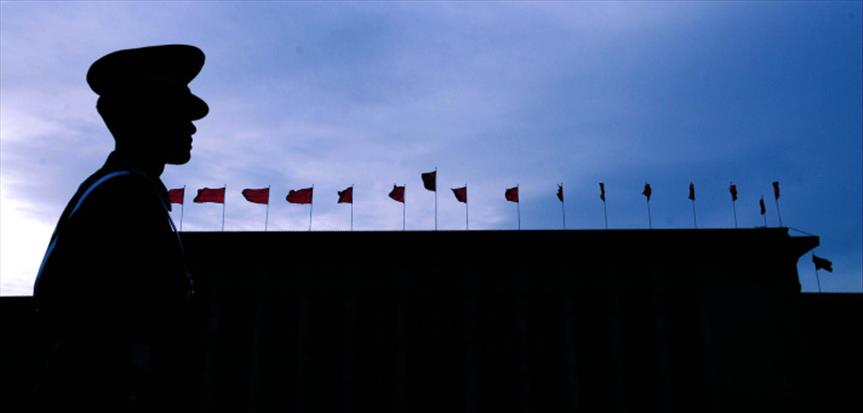
China's 18th National Congress that will reshape the top of the state, will be held on Thursday in Beijing, capital of China.
Established in 1921 the Communist Party of China (CPC) made its first national congress in 1921 in Shangai with only 12 people. 2,270 delegates will attend the 18th congress of CPC, now the base of the political life and the administration in the country. Elected delegates represent states, provinces and 56 ethnic groups.
Due to term and age limits restrictions, seven of the nine members of the Politburo Standing Committee will be retiring. This includes current leader Hu Jintao, who will step down as the party's General Secretary. The Congress will elect the 18th Central Committee of the Communist Party of China and will likely elect currently touted successors into power.
Deputy President Si Cinping is expected to take over the presidency from Hu Cintao and Deputy Premier Li Kiciang is expected to take over the prime ministry from Vin Ciabao.
World is watching the congress process closely.
The Communist Party of China (CPC) was founded on July 1, 1921 in Shanghai, China. After 28 years of struggle, the CPC finally won victory of "new-democratic revolution" and founded the People's Republic of China in 1949. The CPC is the ruling party of mainland China (P.R. China).
The Third Plenary Session of the 11th Central Committee of the Communist Party of China, held in December 1978, decided to shift the focus of the Party's work to socialist modernization and set a policy of reform and opening up to the outside world.
The highest leading body of the Party is the National Congress and the Central Committee elected by it. The National Congress of the Party is held once every five years and convened by the Central Committee.
CPC, with 82 million members, is the sole authority in the administration. 9-membered Politburo Standing Committee is the highest board of the Party and Party's Secretary General- the highest title within the CPC- be the president of the country.
Despite major economic transformation and improvement in prosperity within the past decade, the Chinese people have faced problems due to growing economy, Internet and social networks as well as income inequality.
The country's relatively poorer central and western parts lagged behind in economic development compared to eastern China and coastal regions.
Over the last years China emerged as a country with a lot more to say in global affairs amid the global downturn and Europe's debt crisis.
Increase in per capita income in urban areas soared to $3,461 in 2011 from $931 in 2002 as urban population for the first time made up more than half of the total population in 2011.
China's gross domestic product was up from $1.2 trillion in 2002 to $7.3 trillion in 2011 as the country's foreign trade volume increased to $3.84 trillion in 2011 from $621 billion in 2002.
Rapid economic development has sent energy consumption from 122 billion kWh in 2002 to 477 billion kWh in 2011.
Reporting by Ali Ihsan Cam & Tevfik Durul