Beril Canakcİ
17 November 2026•Update: 17 November 2026
- Visible from both hemispheres, the Leonids are among fastest meteors, traveling at about 71 kilometers per second
- No special equipment is needed, but dark skies and hours before dawn offer best chance of spotting them
One of the year’s fastest meteor showers is lighting up the night sky this week as Earth crosses a trail of ancient comet debris, giving skywatchers around the world a chance to see brief flashes of light overhead.
The Leonid meteor shower is expected to peak Nov. 17-18, with as many as 15 meteors per hour under ideal conditions, according to NASA. Most observers, however, are likely to see fewer.
Here is what to know about the celestial event and how to watch it.
What causes the Leonid meteor shower?
The Leonids occur every November when Earth passes through a stream of dust and small particles left behind by Comet 55P/Tempel-Tuttle, which orbits the sun approximately every 33 years.
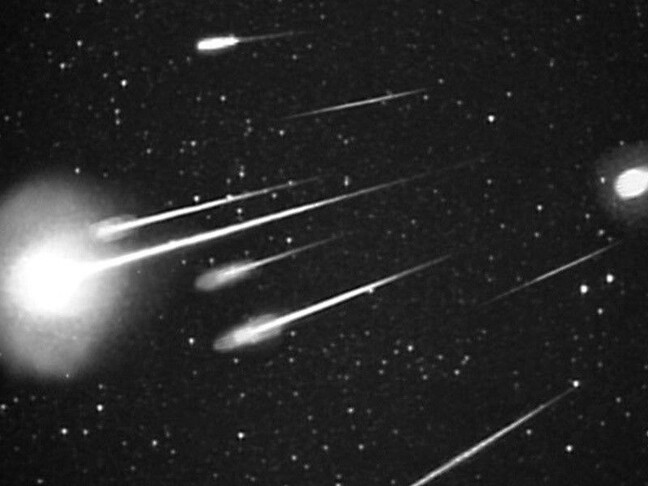
As the particles enter Earth’s atmosphere at high speeds, they heat up and produce bright streaks of light commonly called shooting stars. Despite their name, these are not stars falling from the sky.
The shower takes its name from the constellation Leo, the Lion, from which the meteors appear to originate.
When is best time to watch?
The shower is active from Nov. 6-30, with its main peak expected around Nov. 17-18.
NASA recommends watching in the early morning hours of both days, particularly after the moon has set and before dawn.
The moon reaches its first-quarter phase Nov. 17, meaning its light could obscure some fainter meteors earlier in the night.
Where will meteor shower be visible?
The Leonids can be seen from both the Northern and Southern Hemispheres, although observers north of the equator generally have better viewing conditions.
The meteors appear to radiate from Leo, which rises in the eastern sky, but they can streak across different parts of the sky.
For the best view, observers should find a dark, open location away from city lights, preferably with clear skies and an unobstructed view of the sky.
Telescopes and binoculars are unnecessary. NASA advises allowing about 30 minutes for the eyes to adjust to darkness.
What makes Leonids special?
Speed is their defining feature. Leonid meteors enter the atmosphere at roughly 71 kilometers (44 miles) per second, making them among the fastest meteors visible from Earth.
Some leave glowing trails that linger briefly after the meteor itself disappears.
The shower also has a history of extraordinary outbursts. In 1966, observers witnessed a meteor storm with thousands of meteors per hour, far beyond the usual annual display.
Such a storm is not expected in 2026, with the International Meteor Organization forecasting a more modest peak of about 15 meteors per hour under ideal conditions.