By Mubasshir Mushtaq
MUMBAI, India
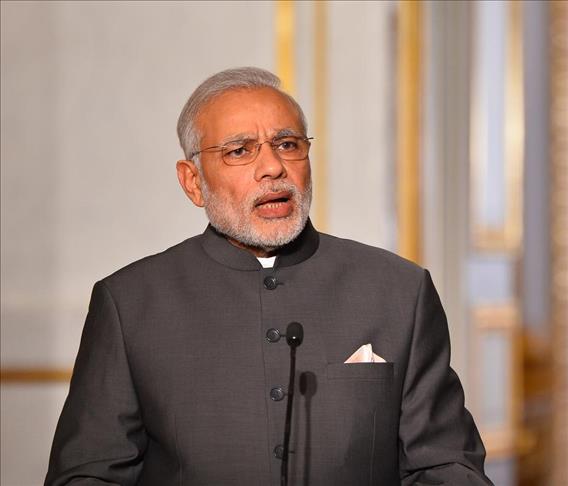
India's Prime Minister Narendra Modi arrived in China on Thursday for a visit aimed at shifting their relationship away from regional rivalry, towards one based more on mutually-beneficial trade.
Ahead of the visit, India's Cabinet approved Wednesday three agreements between the countries for co-operation in mineral mining, 'traditional' medicine and tourism.
Modi was welcomed by President Xi Jinping in the northwestern city of Xi'an, home to the Wild Goose Pagoda that hosts artifacts brought by a Buddhist scholar who spent 17 years in India. They will then travel to capital Beijing for talks.
Modi, who next week marks a year in office, will spend three days in China before setting off for Mongolia and South Korea; whose economic model is an inspiration for Modi.
With 50 businessmen accompanying him, Modi has made it clear that the focus of his tour, in particular for his own Make In India manufacturing agenda.
"I think Modi is seeking to re-orient Indo-Chinese relations and make it a more commerce-driven one," Harish Nambiar, a senior journalist told Anadolu Agency, highlighting however, that the current trade relationship is heavily balanced in favor of China.
The two neighbors are also expected to discuss longstanding boundary disputes which have, in the past, been the cause of hostility between the regional rivals.
Pratinav Anil, a scholar on Europe and Asia at Sciences Po, Paris, told Anadolu Agency however that India and China have long been vocal about border disputes, to harness domestic support, but do not seriously address them during bilateral talks.
"India never had military parity with China. This makes a ‘hardline’ stand with China quite impractical, and a softer approach through Memorandums of Understanding, communiqués and the encouragement of trade makes more sense," Anil said.