- Strong El Nino could test whether international funding can meet the costs of floods, drought, food shortages, Jorge Gastelumendi tells Anadolu
- Funding from developed countries ‘will never be enough because the challenge is so great,’ Gastelumendi adds
The US retreat from international climate cooperation could leave vulnerable countries less able to recover from disasters, potentially increasing migration pressures that could also affect the US, a climate expert warned.
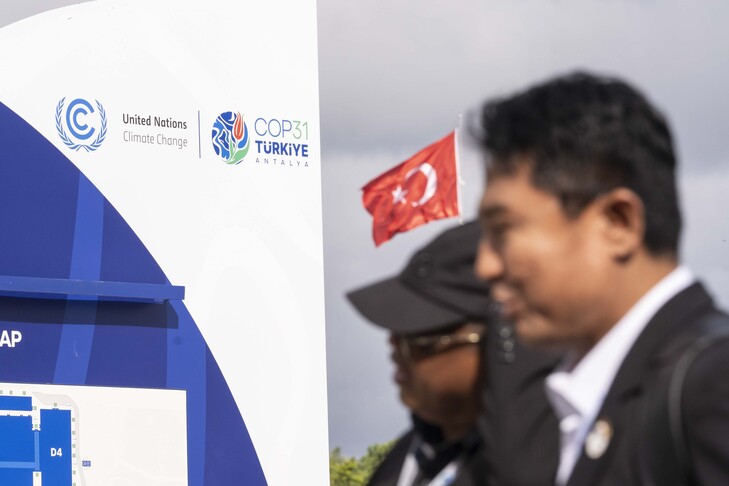
Jorge Gastelumendi, senior director of the Atlantic Council's Climate Resilience Center, told Anadolu at the COP31 UN climate summit in Antalya that the consequences extend beyond the loss of financial support.
He warned that when a major donor withdraws from climate cooperation, it can also weaken the international response to disasters.
"It also impacts the way international processes look and how other countries follow that lead," he said.
With less international support, vulnerable countries could struggle to recover from disasters, increasing pressure on people to leave their homes, Gastelumendi said.
Countries withdrawing assistance could ultimately face consequences themselves. The US, for example, "might need to receive more immigration," he said.
"It's a full circle. Everything is connected, in a way."
Gastelumendi previously served as a chief adviser and climate negotiator for Peru, headed the Nature Conservancy's international climate finance team and managed a carbon fund at the World Bank.
His warning comes as Washington continues to pull back from international climate commitments.
The US stepped down from the board of the Fund for Responding to Loss and Damage in March 2025. Launched at COP28, the fund helps vulnerable developing countries cope with climate impacts.
Its withdrawal from the Paris Agreement also took effect on Jan. 27 this year, according to the UN.
Weather-related disasters triggered 27.2 million internal displacements worldwide in 2025, according to the Internal Displacement Monitoring Centre, which counts each movement, including repeat displacements.
However, most climate-related migration and displacement occur within affected countries, according to the UN's Intergovernmental Panel on Climate Change. People who cross international borders generally move to neighboring countries.
El Nino could test climate finance
Gastelumendi said in a statement in August that a strong El Nino could test whether international climate finance can respond to shocks ranging from floods and droughts to food insecurity and health emergencies.
Asked in Antalya whether the financial system was prepared, he said the response required more than negotiating how much wealthy countries should contribute.
Climate finance talks tend to focus on "specific amounts of money that developed countries are meant to be delivering to developing countries," he said.
“That is important for issues, historical issues, but it's not going to be enough, and it will never be enough because the challenge is so great.”
He pointed to steps governments can take to reduce their vulnerability to disasters, including preparing health services for heat waves, strengthening food supply chains and upgrading energy infrastructure to withstand extreme weather.
Those decisions, he said, require governments "to think strategically on how you want to be competitive and resilient as an economy."
Cooperation amid competition
Shifting geopolitical ties are also changing how countries negotiate at climate summits, Gastelumendi said.
Governments may seek partners on technology investment or food trade while competing with those same countries in other areas, he explained.
“Countries are looking for opportunities to collaborate with some, and at the same time compete with the same people in other areas,” he said.
COP31 runs from Nov. 9 to 20 in Antalya, with Türkiye holding the presidency and Australia leading negotiations.
But Gastelumendi stressed that responsibility extends beyond the summit.
Governments also need domestic policies that encourage businesses to invest in agriculture, health, energy and infrastructure.
“There is a process here that we're going to be seeing in Antalya over the next two weeks, but there is also a responsibility in the capitals of countries to deliver the right policies to engage different actors, including the private sector, to do more on the ground for people and communities,” he said.