By Gözde Nur Donat
ANKARA
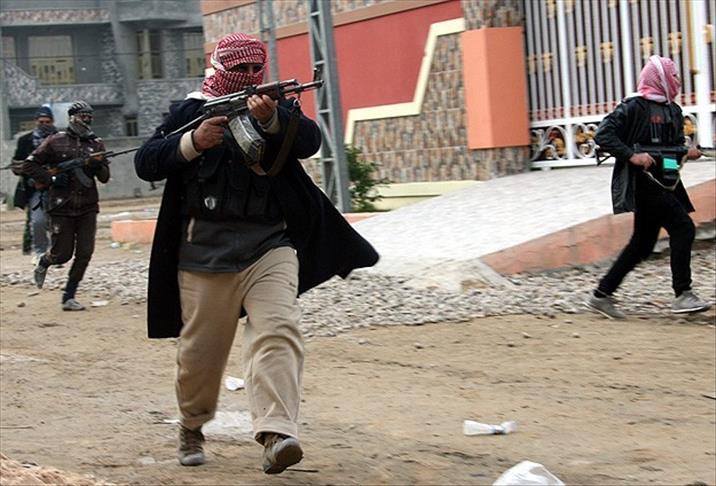
The Iraqi government's marginalization of the country's Sunni Muslim population has played into the hands of the radical militants who have taken control of parts of northern Iraq, analyst Osman Ali said Friday.
Ali, from Erbil's Selahuddin University, told the Anadolu Agency at a conference at the Center of Middle Eastern Strategic Studies in Ankara that Iraq's Prime Minister Nouri al-Maliki had provoked the current situation, where northern parts of the country have fallen under the control of militant group Islamic State in Iraq and the Levant, known as ISIL.
He accused Maliki, who belongs to the Shia denomination of Islam dominant in Iraq, of using sectarian policies.
"Maliki rigged the elections and unfairly took control of all political institutions. He influenced the Iraqi independent High Election Commission to prevent running of Sunni elites in the elections. US, especially the Obama administration, also kept silent on moderate demands by the Sunni Arabs," he said, pointing out that ISIL have operated in Iraq since the 2003 U.S. invasion. "U.S. administration allowed armed local tribes in Sunni regions to fight with ISIL. But as soon as U.S. withdrew, Maliki killed the leaders of these tribes one-by-one and destroyed them."
At the conference, Iraqi and Turkish analysts discussed Iraq's uncertain future in the wake of ISIL's seizure of northern cities Mosul on Tuesday and Tikrit on Wednesday. The Sunni group came to the fore after the U.S. invasion of Iraq in 2003, under the name Al Qaeda in Iraq.
"The possible scenarios for Iraq's future, unfortunately, is not a unity state anymore. Either it would be a loose confederation, or a disintegration will follow. Maliki rule meant the disintegration in Iraq," said Ali.
Ali also said the best choice for Iraq is to establish an interim "national salvation" government that would not exclude any parties.
Mahir Nakip, an academic from Ankara's Cankaya University, said Iraq's constitution is "ridden with contradictions" and has played a big part in the fracturing of Iraqi politics.
"Iraqi Shia and Kurds were dominant in the making of this constitution after the 2003 U.S. invasion, as being the sides most oppressed under Saddam's rule," Nakip said.
Nakip pointed out that the constitution mentioned disputed "regions" between the Kurdish Regional Government and Iraq's federal government but the only city mentioned was Kirkuk -- an ambiguity that encourages dispute.
"The regions other than Kirkuk are being determined by the Kurds themselves. And now Kurdish Peshmerga forces would claim rights on those territories they entered due to ISIL presence,” he said.
www.aa.com.tr/en