By Joshua Carroll
YANGON, Myanmar
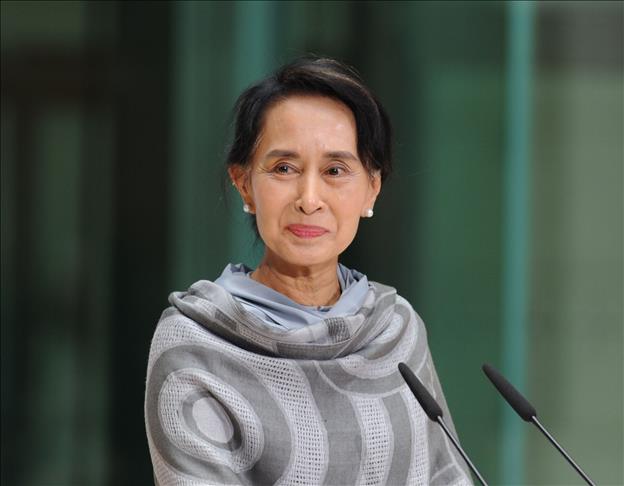
Hopes iconic former political prisoner Aung San Suu Kyi will become president after Myanmar’s general elections next year were dealt a blow Friday as a parliamentary committee voted against changing a clause that bars her.
The famous democracy campaigner, who spent a total of 15 years under house arrest for opposing Myanmar’s military junta, is not allowed to lead the country because of a law barring anyone with foreign relatives from the role.
Suu Kyi’s late husband, the academic Michael Aris, was British, as are her two sons.
The law is ostensibly designed to protect Myanmar’s national interests, but in reality is aimed directly at blocking Suu Kyi, who enjoys widespread popular support in the country, from rising to power.
The Irrawaddy magazine reported Friday that the country's Constitutional Amendment Implementation Committee had voted that Article 59 (F) - which bars Suu Kyi from Burma’s top post - should not be changed.
The committee is tasked with making recommendations to Parliament before lawmakers vote on any ammendment. However, lawmakers do not have to follow.
A spokesman for Suu Kyi's National League for Democracy, Nyan Win, told The Irrawaddy that since the decision had only been made by the committee - not the Parliament - "it is too early for us to comment".
"We need to wait and see the decision of the Parliament and the parliamentarians,” he added.
The NLD has been campaigning to amend Myanmar’s 2008 constitution, which as well as barring Suu Kyi from the presidency also guarantees the military 25 percent of seats in parliament.
MPs in Myanmar are considering changes to the constitution ahead of next year’s election, but the military has an effective veto over any amendments, which require a 75 percent majority.
Despite that, the NLD leadership still believes there is hope that a full parliamentary vote could see the law overturned.
In 2010 Myanmar’s military junta used rigged elections to install a quasi-civilian government led by former generals.
The new regime has brought in sweeping reforms and earned widespread international praise. The U.S. has lifted most sanctions against the Southeast Asian country, but a spending bill passed in Congress earlier this year requires constitutional reform before the remaining sanctions are lifted.
Next year’s election will be a key test of whether the country’s leaders are serious about building a democracy in a country that languished for five decades under dictatorship.
www.aa.com.tr/en