Kirkuk key to Kurdish aspirations, say experts
Exploiting the oil reserves around Kirkuk will solidify Kurdish aspirations for an independent homeland in northern Iraq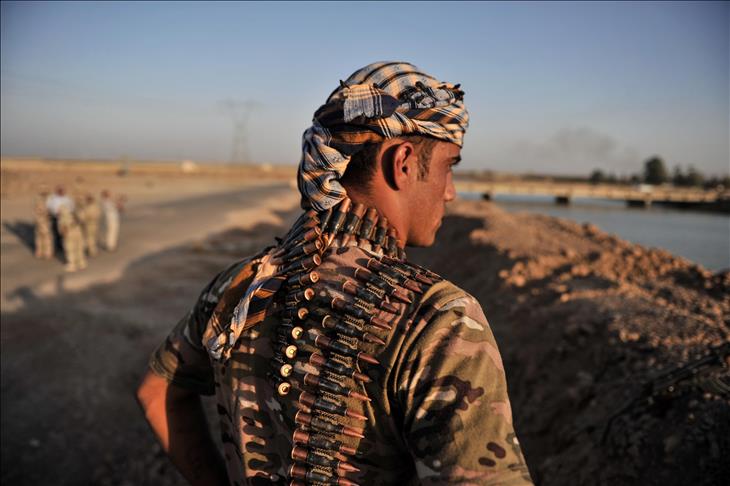
By E. Gurkan Abay
ANKARA
The oil-rich city of Kirkuk will play a key role in Kurdish aspirations to form an independent state, experts said Tuesday.
The recent violence that has gripped Iraq as militant forces led by the Islamic State of Iraq and the Levant, or ISIL, seize territory has amplified calls for an independent Kurdish state in northern Iraq.
"Oil reserves in northern Iraq facilitate the fact that Kurds are asking for independence," Professor Jean-Francois Seznec, a Middle East expert at Georgetown University, Washington D.C., told the Anadolu Agency.
Underlining the importance of Kirkuk’s role in this ambition, Seznec said controlling Kirkuk also means controlling one of the largest oil fields in the world. The city sits atop nearly 9 billion barrels of oil, 13 percent of Iraq's proven reserves. Some estimates put the oil reserves in the Kurdish territory at 45 billion barrels, greater than oil company BP's estimates of reserves in the U.S. or Nigeria, Africa's biggest producer.
On Tuesday, Kurdish leader Massoud Barzani told the BBC that he wanted to hold a referendum on independence within months.
"Independence is a natural right of the people of Kurdistan, all these developments confirm that, and from now on we won’t hide that the goal of Kurdistan is independence," he told the British broadcaster in an interview.
In mid-June Kurdish peshmerga troops moved into Kirkuk as the Iraqi army retreated in the face of ISIL advances.
"The current oil production of Kurdish territories amounts to only 200,000 barrels a day," Seznec, the Middle East expert, said.
He added that the regional Kurdish government could produce up to 1.2 million barrels a day if international oil companies began working the fields around Kirkuk.
"At that point, they will be claiming independence and [be able to] maintain independence."
Oil giants Exxon Mobil and Chevron already have ongoing deals with the regional government in some oil fields and would be happy to see Kirkuk in Iraqi Kurds' hands, Seznec explained.
Carole Nakhle, an energy economist at the Carnegie Middle East Center, said the availability of oil and gas resources and the presence of major international investors gives the Kurdish government the confidence to seek independence.
She added: "The threat of [ISIL] makes that ambition a more pressing urgency, especially if Baghdad seems unable to protect its northern regions."
Emphasizing Iraq’s potential, Nakhle said realizing this potential will depend on a combination of factors.
She said: "Security is an important factor but government policy towards international investors and the level of bureaucracy also play a major role in encouraging or discouraging investment, which in turn will determine whether Iraq will succeed in reaching its ambitious production targets."