01 March 2016•Update: 01 March 2016
BERLIN
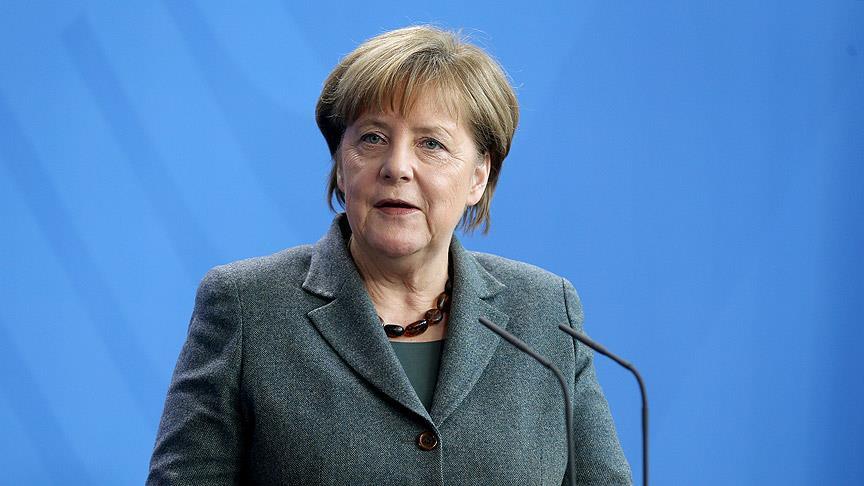
The upcoming EU-Turkey summit has become even more vital for Europe amid the worsening refugee crisis at the Greece-Macedonia border, German Chancellor Angela Merkel has said.
Addressing a joint press conference alongside visiting Croatian Prime Minister Tihomir Oreskovic in Berlin on Tuesday, Merkel criticized unilateral measures taken by several countries to stop the inflow of asylum seekers, which has put a heavy strain on Greece.
She said that a solution to the problem could only be reached collectively.
"As I have always said, unilateral decisions do not help. We, as 28 EU member states should agree on common measures," she said.
She warned that unilateral measures may trigger new routes and new instabilities in the region.
"Therefore, I believe that Monday’s EU summit has become more urgent," she said.
Merkel said the first part of the summit will bring together Turkish Prime Minister Ahmet Davutoglu and leaders of 28 EU member states, with the goal of reviewing progress in the implementation of the EU-Turkey action plan agreed last November.
"In the second part of our summit we will be dealing with the difficult situation in Greece," she said.
Thousands of refugees and asylum seekers remained stuck at the northern Greek-Macedonian border this week as countries along the Balkans route to Europe increased restrictions.
In recent weeks, Austria placed strict limits on the inflow of asylum seekers, causing a domino effect through the Balkans and leading to criticism from other EU members and refugee agencies.
Athens has threatened to block decisions at an EU-Turkey summit on March 7 unless the EU forces members to take their share of refugees.
More than 111,000 people have arrived in Greece by sea from Turkey since the start of the year, according to the International Organization for Migration. Last year, more than 850,000 arrived in Greece via the Aegean Sea.
At the EU-Turkey summit last November, Brussels and Ankara agreed to take measures to strengthen patrols in the Aegean and to counter people-smuggling gangs ferrying refugees into Europe by sea.
The EU has also promised 3 billion euros ($3.28 billion) aid to Turkey to support projects that would improve the living conditions of refugees hosted in the country and near its borders.
Turkey hosts around 2.7 million Syrian refugees, making it the country with the largest refugee population in the world.