JEDDAH, Saudi Arabia
Turkey believes Saudi Arabia can play an important role in revoking the latest court ruling on former Egyptian President Mohamed Morsi and his supporters, said a high-ranking government official.
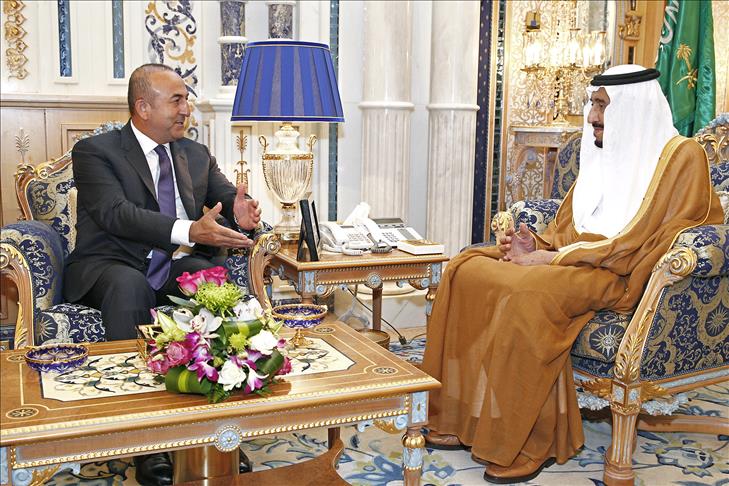
On the sidelines of an extraordinary meeting of the Organization of the Islamic Conference (OIC), Turkey's foreign minister Mevlut Cavusoglu spoke to journalists Wednesday.
"The current coup regime in Egypt is bringing the country to the edge of a cliff," said Cavusoglu, on the sidelines an OIC meeting on the situation in Yemen. "We think that Saudi Arabia can play an important role in revoking death sentences and releasing political prisoners."
The foreign minister also said that the West could not display a consistent stance against the coup regime in Egypt.
"We underline that no one should keep silent anymore." he said,
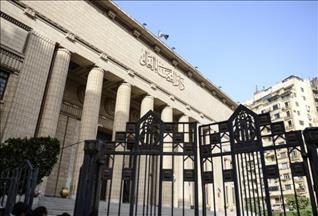
On Tuesday, Morsi was sentenced on charges of espionage and on charges related to a mass jailbreak incident in 2011 during demonstrations that removed then Egyptian ruler Hosni Mubarak. Apart from the death penalty, Morsi was also given a life sentence.
The Egyptian court had also sentenced five Muslim Brotherhood leaders, including the group’s head, Mohamed Badie, to death for participating in the jailbreak.
Ninety-four other co-defendants were also sentenced to the gallows, in absentia, on similar charges, including prominent Muslim scholar Yusuf al-Qaradawi.
Morsi was ousted by the military in a 2013 coup -- after only one year in office -- following protests against his presidency.
Since Morsi's removal, the Egyptian authorities have launched a crackdown on dissent that has largely targeted Morsi supporters, leaving hundreds dead and thousands behind bars.
Situation in Yemen
In the meeting, Cavusoglu said Turkey and Saudi Arabia were on the same page regarding other regional issues, namely the situation in Yemen.
"We talked about the situation in Yemen, Syria and Iraq as well. King Salman asked for a report from Foreign Minister Adel al-Jubeir about these issues," he said.
Nearly 20 million Yemenis are now in need of humanitarian assistance, which represent 78 percent of the entire Yemeni population, the UN says.
The number of people who need humanitarian assistance in the country increased by 4 million after the Saudi intervention in March 2015, it says.
Fractious Yemen has remained in turmoil since last September, when Houthi militants overran Sana’a from which they have sought to extend their influence to other parts of the country.
On March 25, Saudi Arabia and its Arab allies began an extensive air campaign targeting Houthi positions across the country.
Riyadh says its campaign comes in response to appeals by Yemeni President Abd Rabbuh Mansur Hadi -- who is in Saudi Arabia -- for military intervention against Houthi militants.
The Houthis, however, denounce the offensive as unwarranted “Saudi-American aggression” against Yemen.