Marcus Brogden
15 January 2016•Update: 17 January 2016
By Max Constant
BANGKOK
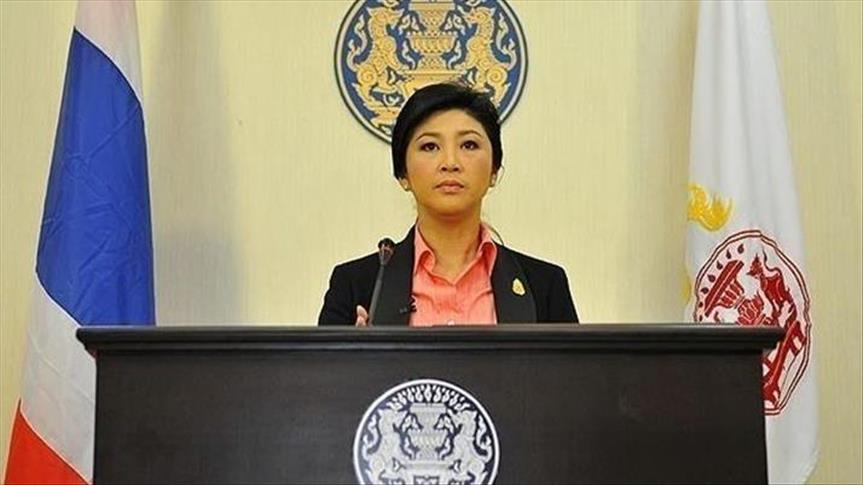
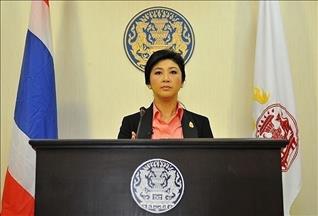
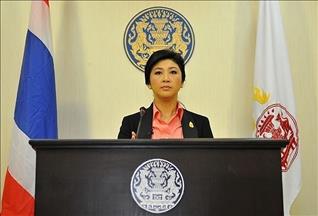
Crowds gathered outside a Bangkok courthouse Friday for the arrival of former Thai prime minister Yingluck Shinawatra, due to appear in court on long-standing allegations of dereliction of duty in relation to a much criticized rice-subsidies scheme.
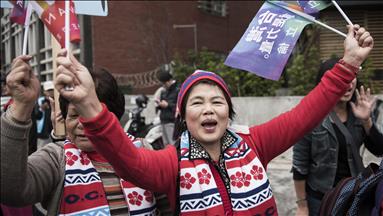
As Yingluck -- facing up to ten years in jail -- stepped out of a car at the Supreme Court in northern Bangkok, hundreds of supporters presented her with red roses while around 100 policemen stood by.
The crowd was prohibited from waving placards, but many brandished heart-shaped pictures showing Yingluck and her brother, Thaksin Shinawatra -- a former prime minister and the ruling junta's nemesis whose government was overthrown in a coup in September 2006.
"We are trying our best and we are ready to bring our witnesses in April," said Yingluck, whose own government was removed in May 2014.
A rice-farmer from Nakhon Pathom province then stepped forward from the masses to present her with an ear of withered rice plants adorned with a jasmine garland, which he said was symbolic of her plight.
Despite the scheme causing massive losses to the country, the Shinawatras are widely supported within the rural population, who enjoyed prosperity under various populist schemes put in place by Thaksin, including universal healthcare and subsidy schemes.
During her time as prime minister between 2011 and 2014, Yingluck launched a scheme under which rice was bought from farmers at twice the market price with a stated objective of improving their life conditions.
Yingluck’s political opponents criticized the scheme, saying that it was ill conceived, brought massive financial losses to the state and was riddled with corruption.
The finance ministry estimated total losses at $15.8 billion.
Four prosecution witnesses were called to the stand Friday, among them Nipon Poapongsakorn, a renowned economist and anti-corruption crusader, and Prajuck Boonyoung, the deputy-auditor general, who testified that letters had been sent by the auditor general to Yingluck while she was PM to warn her of damages caused by the scheme.
Altogether, 17 witnesses will testify for the prosecution, and another 43 will testify for the accused.
Defense witnesses will take the stand at the end of March or in April and the verdict is expected in December.
Outside of a jail sentence, Yingluck's assets could also be seized in an administrative order as compensation for state losses under the scheme.
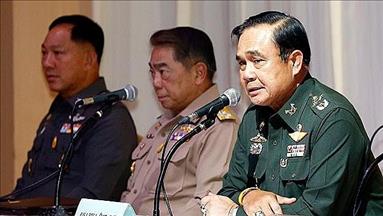
In October, Yingluck wrote a letter to junta leader-cum-prime minister Gen. Prayuth Chan-ocha appealing the order.
"I believe all people are entitled to a fair trial in court which is fundamental to the rule of law," she wrote. "Since May 22, 2014, I have been continuously mistreated in relation to the rice-subsidy scheme."
In January 2014, Yingluck was retroactively impeached from her position as prime minister by the military-appointed National Assembly for dereliction of duty because she did not stop the subsidies scheme, and on May 22, 2014, Chan-ocha's military overthrew Yingluck's elected government.
The general has been leading the country since then.
Yingluck has asked that the administrative order be revoked and instead a civil case filed at court after the closure of the criminal case.